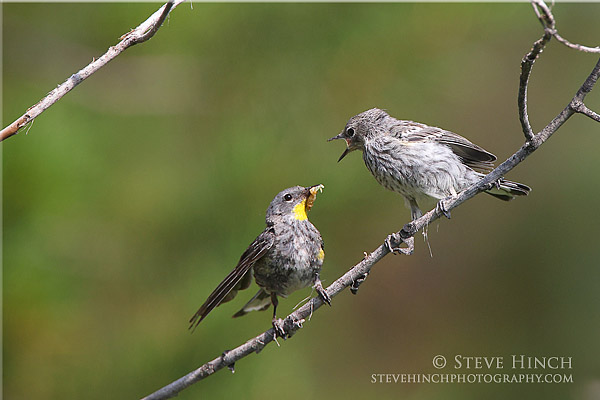
Yellow-rumped Warbler feeding a fledgling. Canon R5, 500mm + 1.4TC, tripod, 1/4000 @ f5.6, ISO 1600
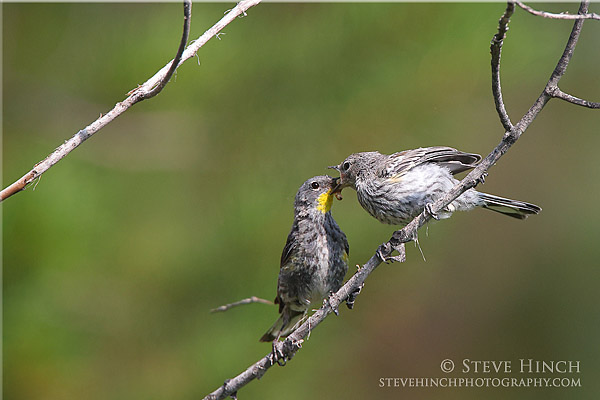
For all moms with toddlers out there, including my wife, they’re all demanding, even this fledgling Yellow-rumped Warbler. I was thrilled to see this young bird a couple of days ago. I’ve had Yellow-rumped Warblers coming to the water sources in my yard all summer, so I assumed they were nesting nearby. Sure enough, a couple or days ago they showed up. I’ve never seen a fledgling Yellow-rumped before, so it was pretty cool. If you pay attention to my captions and camera settings, I had manually set my exposure for photographing hummingbirds.
Yellow-rumped Warbler feeding a fledgling. Canon R5, 500mm + 1.4TC, tripod, 1/4000 @ f5.6, ISO 1600
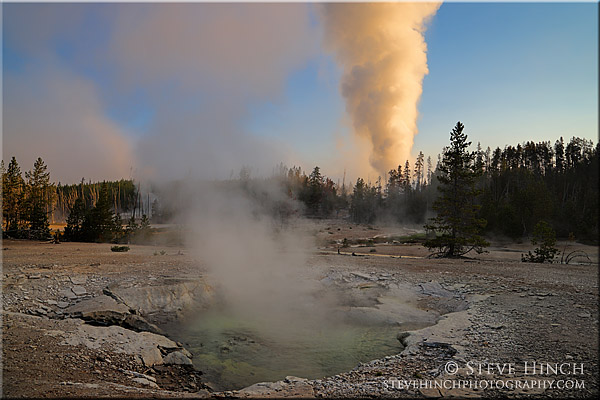
Steamboat Geyser and Crater Spring (foreground). Canon R5, 24mm, handheld, 1/125 @f11, ISO 160
I promised more photos from the eruption of Steamboat Geyser on July 8 so here are three more. Steamboat’s water eruption can reach well over 300 feet and it’s steam column can be considerably taller. Early morning light added a wonderful aspect of the eruption. The image above is from Back Basin with Crater Spring in the foreground. Because the water phase can last a long time, and the steam phase can last for hours, I knew I had plenty of time to walk around and come up with different compositions.
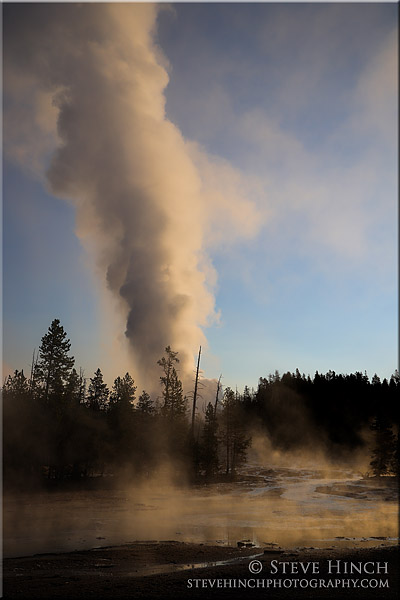
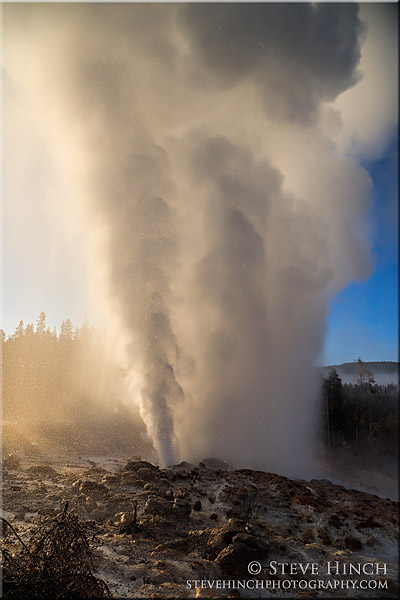
Steamboat Geyser from Back Basin. Canon R5, handheld, 1/400 @ f11, ISO 160
With such height, a Steamboat eruption lends itself well to vertical compositions. The image above was also taken from Back Basin, a short distance further along the trail from Crater Spring. The backlighting on the runoff channels from the numerous thermal features made for an interesting foreground. I’ve seen Steamboat in eruption several times since it started it’s current active phase though I’m nowhere near an expert. But in my experience, I’ve only ever really seen water when on the two viewing platforms closest to the geyser. The challenge with getting the image below is that I was in a downpour of geyser water as it rained back down to the ground. Obviously, rain itself can be harmful to cameras and lenses, but thermal water full of minerals can be even more damaging. So I needed to be very careful with the camera while trying to get an image of the water eruption. In the below image, there is water raining back down all over the left side of the image.
Steamboat Geyser. Canon R5, handheld, 1/2500 @ f8, ISO 400
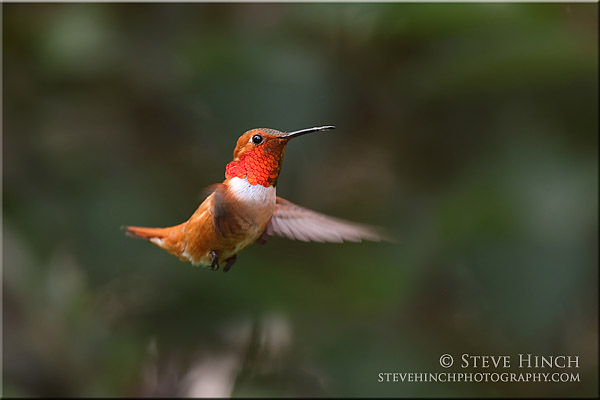
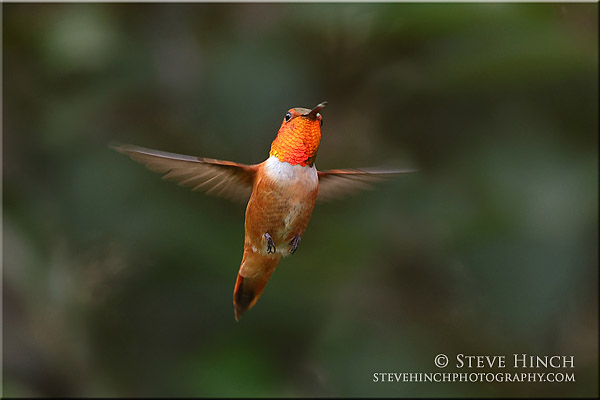
When not traipsing around Yellowstone, the past few weeks have seen my trying, mostly unsuccessfully, to photograph a couple of hummingbirds that show up occasionally in the backyard. This one, a male Rufous Hummingbird, is certainly the most colorful. It’s been unbelievably hot since June and these guys usually come around when it cools down in the evening. In August, I’ll hopefully have more hummingbird visitors as they usually pass through as they start going south.
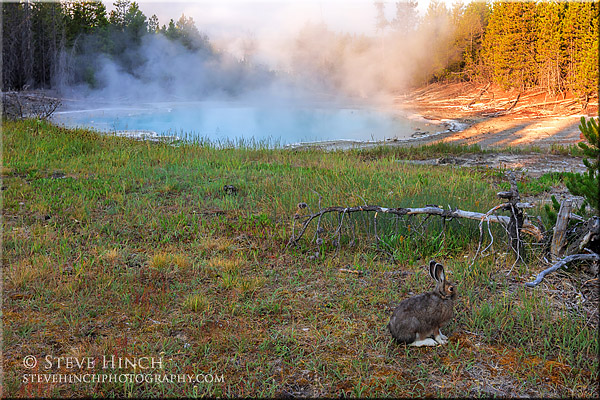
Emerald Spring and a Snowshoe Hare. Canon R5. 1/160 @ f11, ISO 800.
While walking around Norris Geyser Basin, I decided to photograph Emerald Spring. As I approached it, a snowshoe hare came out from under the boardwalk. It was obviously used to people walking along the boardwalk as it casually grazed on some grass long enough for me to compose this scene.
On July 8, I needed to head up to Gardiner, Montana and drove through Yellowstone. I wanted to stop at Norris Geyser Basin to photograph the area in the early light but the fog most of the way up was pretty thick. As I came to the entrance to the geyser basin, the fog thinned out so I decided to go ahead and check things out. I met a family from California and we walked down to Porcelain Basin together and talked about the park. They mentioned they hoped to see Steamboat Geyser erupt. Steamboat is the largest active geyser in the world, reaching heights of almost 400 feet. It’s been in an active face for the past few years but had only erupted once since early May. They started to head off and I started to photograph when the ground started to rumble and a roar broke the stillness of the morning. I looked south and over a quarter mile away, the huge water column of Steamboat could be seen rising over the landscape. I yelled to the family that Steamboat was erupting and we all headed in that direction. The water phase can last for almost an hour so we had plenty of time to enjoy the show. This photo is from the south side of the geyser and the low morning sun illuminates the geyser. Mostly steam is visible and the foreground waterfall is completely made up of water from Steamboat. Most the moisture in the left side of this image is water falling back down from the geyser. I had to walk through that a couple of times and was quite drenched from the experience. It was also important to make sure none of that got on any of my camera equipment as the minerals would damage the glass. Over the past couple of years, I’ve seen Steamboat in both water eruption and steam phase but this was the first time I had been there from the beginning and it was an experience I’ll never forget. I’ll share some more images of the largest active geyser in the world in a few more days.
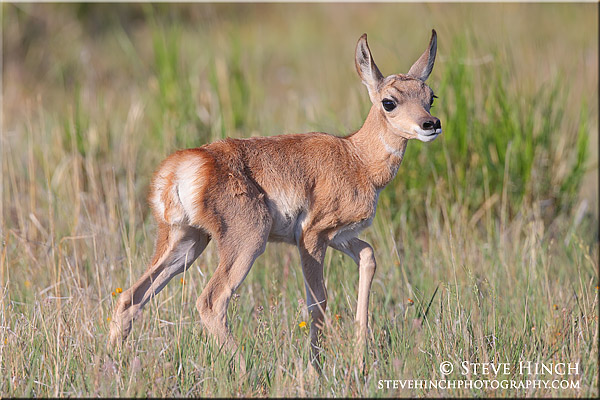
Bison calf, elk calf, and a pronghorn fawn. I’m still hoping to find a moose calf soon but so far no luck. I’ve seen a lot of pronghorn fawns already this year. This one had been hiding in the sagebrush near the road and, probably not wisely, got up to move around. It was quite small so I’d guess it was perhaps a week or so old at most. After stretching it’s legs, it curled back down into the grass. When I passed back by, it was with two other fawns and one doe. Pronghorn does, like many mothers, seem to often babysit other babies.


 steve hinch photography