Impact

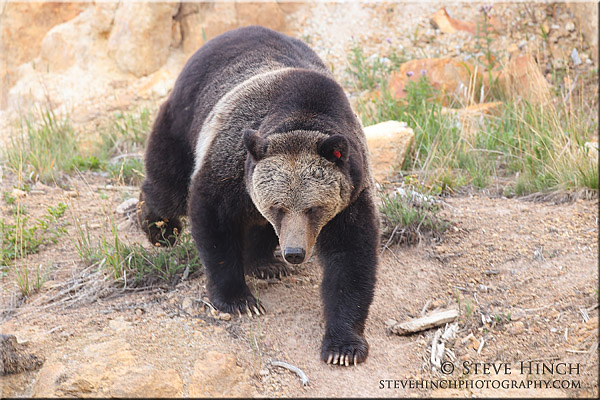
Grizzly Bear. Canon R5, 500mm + 1.4TC, beanbag, 1/125 @ f8, ISO 1600

This is not only the first grizzly I’ve photographed since 2019, it’s the first one I’ve seen. A couple of weeks ago, after walking around Norris Geyser Basin, I drove north. The light was still really low and less than ideal but as I came around a curve, 3 or 4 cars were stopped and this grizzly was walking down an embankment. I don’t usually stop or photograph grizzlies in Yellowstone anymore because I personally feel the huge crowds that result are detrimental to the bears. But since there were only a couple of cars and it was evident the bear was not going to stick around, I pulled over. I use a beanbag to photograph from my car. It’s designed for photography and sits over the window and helps to balance and steady a long telephoto lens. It’s great for wildlife photography because in a moment like this one, getting out of the car is unsafe. You may notice this bear has ear tags. One is visible in this photo. It was also collared. I think many photographers might be tempted to clone out the ear tag but I thought it was an important element in the photo as it told a more realistic story about Yellowstone bears. Whether tagged and collared for research or because the bear has become too acclimated to people, this bear’s life has been impacted negatively by humans.
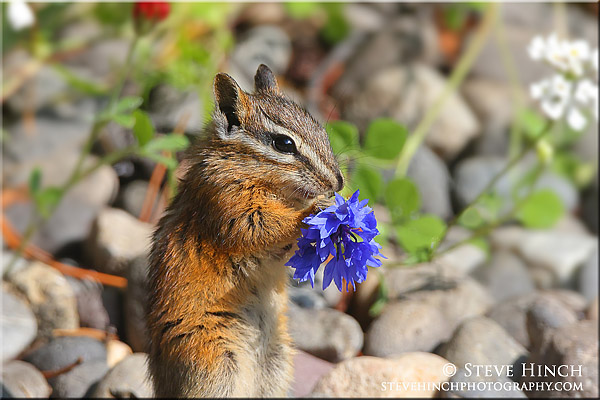
Sorry for not posting, here’s a flower

Chipmunk with a flower. Canon R5, 500mm + 1.4TC, tripod, 1/3200 @ f8, ISO 1600

I’ve had a lot going on lately, not all positive, so I hadn’t posted in a little while. I photographed this chipmunk, a regular in my backyard with a flower. The chipmunk was working it’s way through my flowers and deciding which ones to eat. This one must have been yummy. He later thought about trying to take down a sunflower but thought better of it.

Calliope

Calliope Hummingbird. Canon R5, 500mm + 1.4TC, tripod, 1/6400 @ f5.6, ISO 1600

So far, all the hummingbird images I’ve shared have been of the rufous hummingbirds. They are the most aggressive hummingbird and defend feeding areas vigorously. I’ve seen then even chase of Canada jays! But the hummingbirds that are most likely to use the flowers are the calliope hummingbirds as seen in this photo. Calliope Hummingbirds are the smallest bird in North America at a length of about 3.25 inches. The area behind the flowers was in shadow while the flowers were lit by the early morning sun. To ensure I capture this image correctly, I use manual mode to set my exposure otherwise, as fast as hummingbirds are, the auto exposure may try to expose for the dark background and then I’d miss my shot. It’s easy enough to miss the shot due to other reasons, such as focus, so I don’t want to miss one due to exposure since that’s easy to control.

Norris Geyser Basin

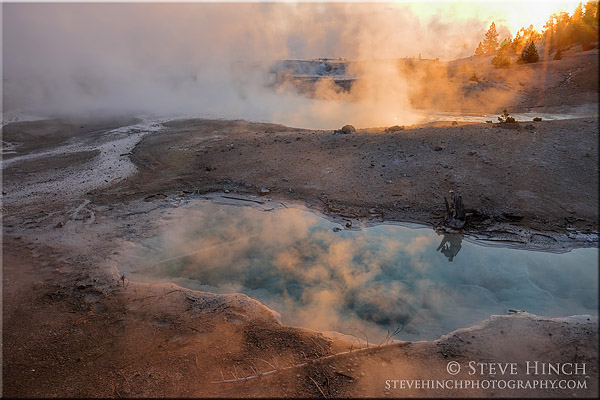
Colliodal Pools, Norris Geyser Basin. Canon R5, 24mm, handheld, 1/250 @ f11, ISO 800

I did another walk around Norris Geyser Basin at sunrise recently. I really enjoy walking Norris because the light never seems to be the same. On this morning, a slight breeze was moving the steam around a lot. The early sun back lit the scene here and the contrast between the turquoise pool and orange steam was really nice. I shot several of the same composition trying to get the steam just right.

Rufous Times Two

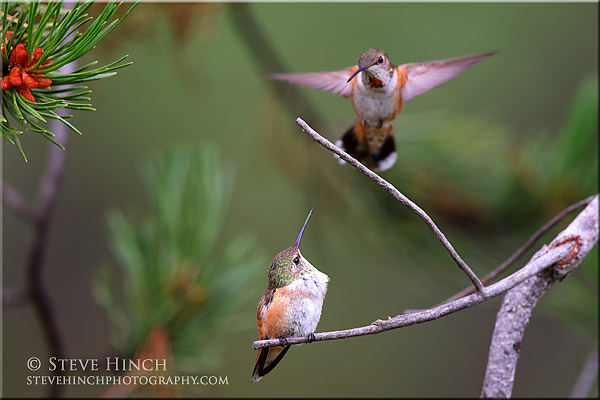
Rufous Hummingbirds. Canon R5, 500mm + 1.4TC, tripod, 1/1000 @ f5.6, ISO 1600

Hummingbirds in general are territorial, but Rufous Hummingbirds are more aggressive than most other species. Primarily I’ve had Rufous Hummingbirds visiting and they’re constantly competing to control the feeders and flowers. I thought it would be cool to have two birds in one image but really thought it would be impossible. But I had the chance last week when the perched bird would not be intimidated by the aggressor. Eventually they even perched next to each other for a few seconds. The bird in flight is not in focus, but otherwise I was pretty happy with how this came out. The light was low and if I had tried for more depth of field, I wouldn’t have been able to stop the fast movement of the flying bird.

The Firehole River

Firehole River. Canon R5, 16mm, handheld, 1/80 @ f11, ISO 800

Previously I mentioned that I’ve mostly been photographing thermal features and hummingbirds. I’m not sure if this technically fits under those categories since the main subject is the Firehole River. But Midway Geyser Basin certainly adds most of the interest to the image since the large steam plumes of Grand Prismatic Hot Spring and Excelsior Crater rise dramatically in the morning light. Grand Prismatic is Yellowstone’s largest hot spring while Excelsior was one of the largest geysers until one of it’s eruptions blew out it’s plumbing. If you’re going to walk the boardwalk to see these features up close expect to have lots of company as this is one of Yellowstone’s most popular walks.

Another Rufous

Rufous Hummingbird. Canon R5, 500mm + 1.4TC, tripod, 1/800 @ f5.6, ISO 1600

For the first part of Spring and Summer, I was pretty diverse with a wider range of wildlife and landscapes but for the past month or so I’ve been mostly photographing two subjects; Yellowstone’s thermal features and hummingbirds in my backyard. What do they have in common you ask? Well nothing, except that they both have my attention and are inspiring my current work. This photo was taken yesterday. One thing I really like with hummingbirds is when I can get some interesting tail position. The wings in this, even though they are covering the eye, are really interesting too. Plus I thought the colors of the bird against the gray background worked well too.

Pink Cone Geyser

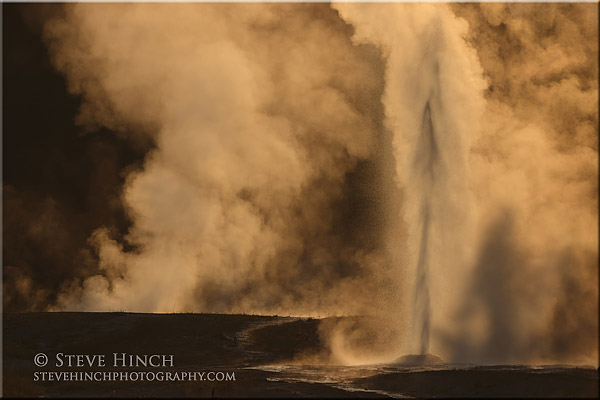
Pink Cone Geyser. Canon R5, 500mm, tripod, 1/6400 @ f11, ISO 800

Last week, I thought I’d make an early run through the Upper Geyser Basin but when I arrived, I wasn’t really feeling motivated. So I headed back towards Firehole Lake Drive to see if anything might inspire me. I came across an erupting White Dome Geyser and was able to get a few photos before it’s short eruption ended. Hopping back in car, I turned the corner and saw Pink Cone in eruption. Reaching a height of about 30 feet, Pink Cone certainly isn’t among the tallest of Yellowstone’s geysers. But since it sits right along side a one way road, it is seen by many people. Typically, it’s viewed from the side of the road adjacent to the geyser. But as I turned the corner and saw it backlit, I knew I wanted to do something different. Using my telephoto lens (500mm), I stopped and set up at a great distance and was able to compose the above scene. I knew if I drove up closer, I wouldn’t have the sun directly behind the geyser, and I’d lose the mood and light of this image. I did eventually move closer and switch to a couple of different wide angle lenses, but this is still my favorite of the morning.