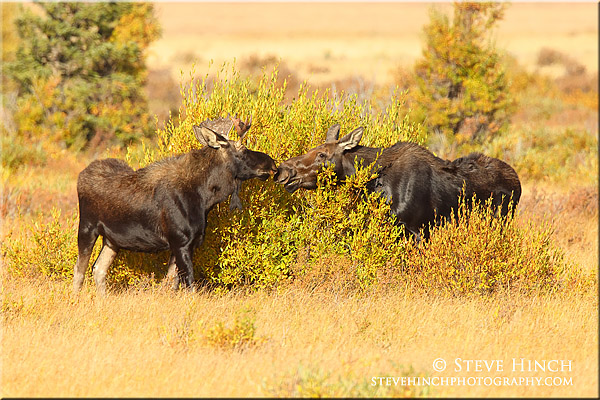
Bull and Cow Moose. Canon R5, 500mm + 1.4TC, beanbag, 1/1250 @ f8, ISO 1600
Besides fall color, September and October means large deer species such as elk and moose are in their breeding season, so I’m always on the look out for both species. While I hoped to find a larger bull moose, this little guy seemed quite happy to have a lady friend. She was actually larger than him but she tolerated his presence quite well. Here they are nose to nose briefly while grazing on the same willow bush.
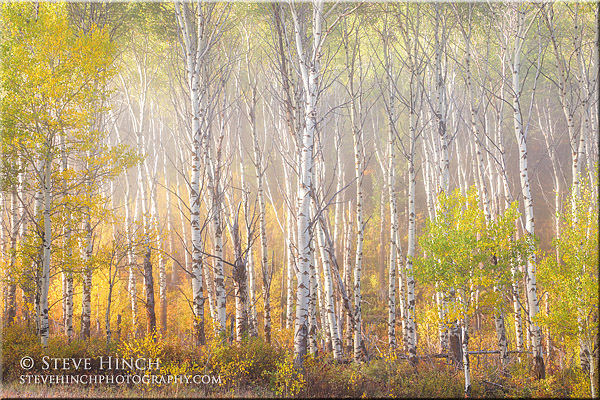
Aspens. Canon R5, 80mm, handheld, 1/320 @ f11, ISO 1600
I find aspens, due to their white bark, photogenic even in the summer. But in Fall when they turn a brilliant gold, they’re especially wonderful photo subjects. There was a light fog lifting out of this stand of aspen when I came across them. I wanted to capture the scene before the fog lifted completely so quickly began working up compositions that drew all the elements together. I feel this one best represented what I saw and what I envisioned as a beautiful autumn aspen scene.
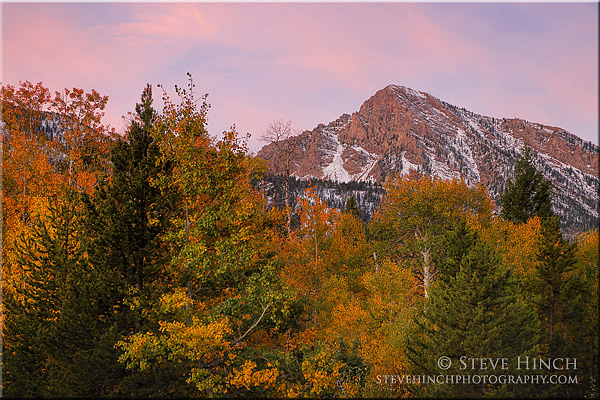
Heavy traffic in Yellowstone lately and a desire to get out and see some beautiful aspen color brought me back out along some back roads away from the crowds this week. As the sun rose, the clouds turned pink and I didn’t have a destination in mind to photograph yet. So I pulled over and quickly explored options before the color in the sky vanished and came up with this composition. Aspens are all over the place right now, color-wise, with some areas at peak while others are still very green. The next few days to a week should be great for color. The exception is that some areas, due to the drought, have had leaves go straight to brown.
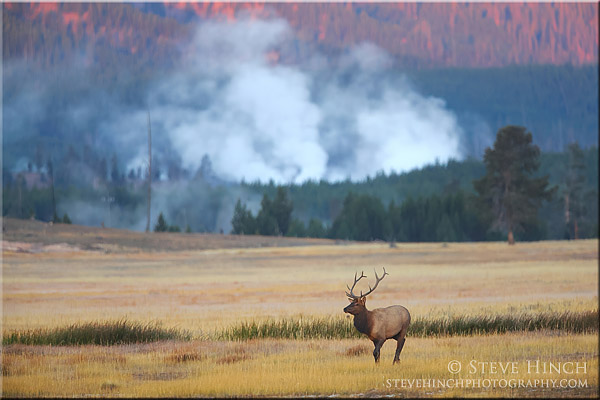
This is another image of the same bull elk I shared earlier in the week. This image was actually taken before the one when elk was in front of the giant steam plume. A different area of thermal features is behind the elk here as it began to move a little faster. I don’t usually shoot at an ISO of 3200 but the situation warranted it here and the camera handled the higher ISO well. If I had chosen to stay at a lower ISO, then I probably wouldn’t have been able to get this shot due to the low light. The sun hadn’t reached the lower part of the frame though a beautiful pink light can be seen along the top. The elk didn’t’ wait around for the light to reach the entire area unfortunately.
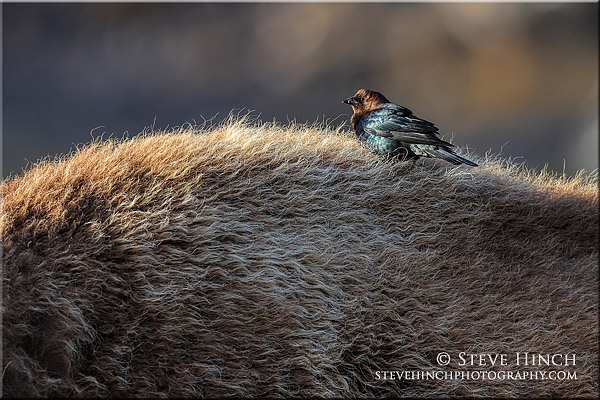
Brown-Headed Cowbird on a Bison. Canon R5, 500mm + 1.4TC, tripod, 1/1600 @ f5.6, ISO 1000
I’m crediting the title of this to the 1985 Song “I Wanna Be a Cowboy” and perhaps showing my age a bit by doing so. Brown-headed cowbirds can often be seen around herds of bison. As the bison graze they chase up insects in the grass which the cowbirds can easily catch and eat. The cowbirds will also eat parasites off the bison. They’re also seen on elk and other ungulates including, as their name suggests, cows. This cowbird was riding around on the back of a bison when I photographed it. Even though I had a long lens with a teleconverter, I did crop this image a respectable amount as it’s not wise to ever be too close to a bison.
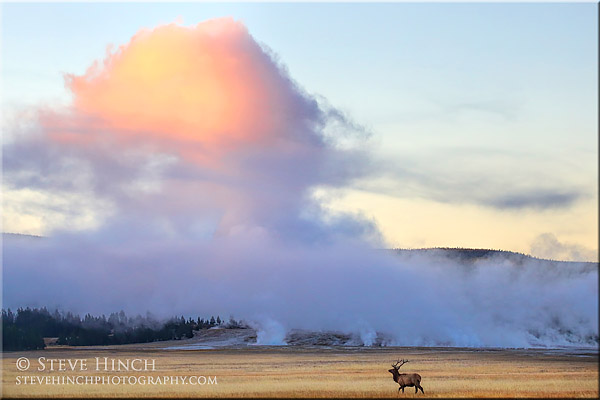
Bull Elk and steam from Fountain Geyser. Canon 5d4, 150mm, handheld, 1/640 @ f8, ISO 1600
I know I tend to make these titles cryptic but the title of this post refers to the huge steam plume behind the elk. This steam plume is coming from an erupting Fountain Geyser for which a number of landmarks in this area share the name including Fountain Flats, Fountain Paint Pots, etc. By this time in September I’d hope to have photographed quite a few elk as it’s their breeding season but so far this is the elk I’ve managed to photograph. I’m not sure if it’s been the heat, the heavy traffic, or some other factor but the elk haven’t been active during the daylight hours much. Speaking of heavy traffic, September used to be considered a “shoulder month” to the busy summer seasons. And I’ve been asked frequently lately about visiting in September since kids are back in school. Unfortunately, there hasn’t been a “shoulder season” to the busy summer months for probably ten years now. September proves to be just as busy as July and August and it’s not uncommon for the West entrance to back up into town. I’m not writing that to deter people from coming to visit only to have the proper expectations.
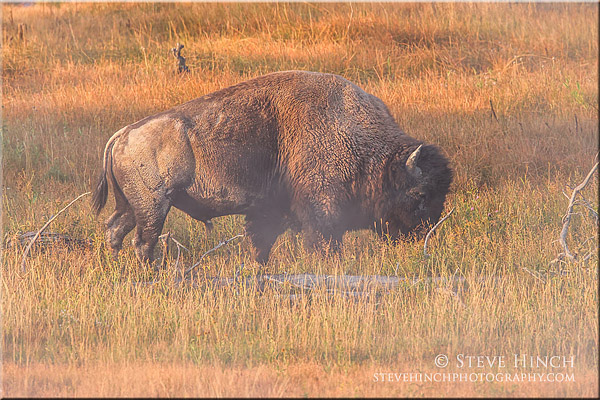
This photo was totally not what I was after when photographing this bull bison. His other side was completely caked in mud that he had rolled in and it made him look totally awesome, if not a little dirty. I waited until the sun lit the scene which was when he decided to turn around and show this side. While he still had some dried mud visible, it wasn’t as impressive. With the breeding season over and these bulls alone again, they’re mostly focused on feeding in preparation for winter. I spent the previous day waiting an hour for a bison to lift it’s head and began to think this guy wouldn’t cooperate either. Well, he didn’t. After the sun came up and he turned around, he slowly walked into the trees not to come back out. Oh well, until the next the opportunity.
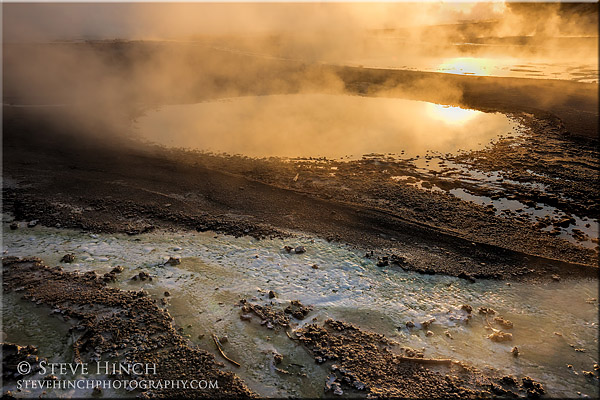
Whirligig Geyser, Yellowstone National Park. Canon R5, 27mm, handheld, 1/2000 @ f11, ISO 1600
Whirli… what? Whirligig, yes that’s the name of a geyser in Yellowstone National Park. In fact, that geyser is the pool of water in the center of this image. But it was actually the runoff channel in the foreground that always draws me to this spot. Trying to find a composition where the runoff channel works well in a photo can be challenging though as it runs alongside and then under the boardwalk. Once the sun was above the distant ridge, the backlight of the steam and pool made this a much more interesting scene and one that I was happy to photograph.
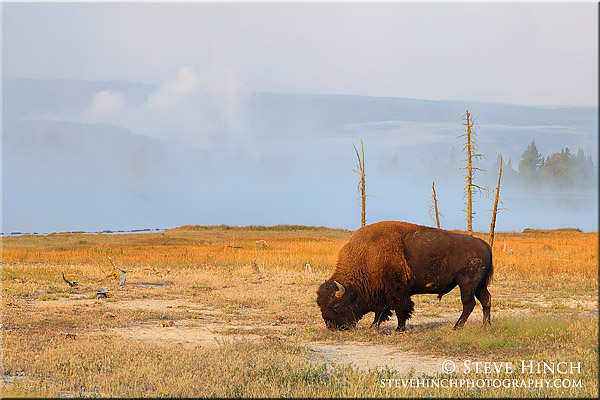
This image just kind of screamed “Yellowstone” to me. The huge steam in the left background is from Midway Geyser basin while immediately behind the bison, more steam obscures the closer area behind the bison. The thermally killed trees, hot springs and steam, and of course, perhaps the most iconic wild animal in Yellowstone, a bison, all add up to a photo that show case America’s first national park.
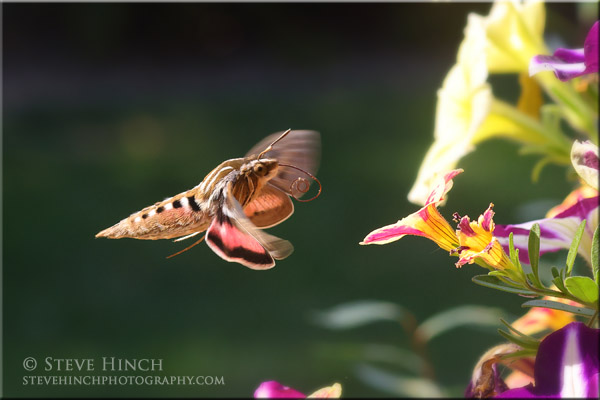
Another hummingbird photo? No, not yet anyway. This is what is commonly called a hummingbird moth, or more correctly a White-lined Spinx Moth. But they do mimic the behavior of a hummingbird in that they feed by hovering near a flower. They then feed through a proboscis, a long straw-like tube, they keep rolled up and extend to get nectar from flowers.

 steve hinch photography