
On Monday, June 13th, Yellowstone National Park was hit with devastating record flooding. West Yellowstone, Montana received a record amount of rainfall over the weekend and at one time received around 36 hours of steady precipitation. With West Yellowstone receiving that much rain, Yellowstone National Park undoubtedly received equally as much since it was widespread weather system. The Yellowstone River’s previous record flow was about 31,000 cubic feet per second (cfs) but on Monday morning it was flowing at 51,000 cfs. Other rivers and streams in the northern section of Yellowstone created catastrophic flooding as well. The towns of Gardiner, Silver Gate, Cooke City, and Red Lodge were all severely impacted by this event and likely will be for some time. I’ll provide some links below about how those communities can be helped.
But it isn’t all gloom and doom and there is some good news. The past several days, I have listened in on conference calls with Yellowstone’s Superintendant, Cam Sholly, and while Yellowstone’s northern range, from Mammoth Hot Springs out through Lamar Valley will likely be inaccessible for a significant length of time, including the rest of this year, the rest of Yellowstone is largely unaffected. Yellowstone National Park will re-open hopefully as early as next week and the Lower Loop will be accessible to park visitors. It is very likely there will be some sort of system in place limiting the number of visitors into the park each day to not overwhelm park resources, but the hope is to ensure people will be able to access the park as conveniently as possible. Places like Canyon, including Upper and Lower Falls, Yellowstone Lake, Hayden Valley, Old Faithful, and Norris Geyser Basin (and Steamboat Geyser), will all be accessible to visitors and are largely unaffected by the flooding in the north. Likewise, the gateway communities in West Yellowstone, Montana, and Cody, Wyoming are completely unaffected by the flooding and operating business as usual and are ready to serve. At the same time, there was no flooding to the south in Grand Teton National Park and the town of Jackson is also business as usual. So do know, once Yellowstone re-opens in the very near future, most of the main natural features will still be available to visit.
At the same time, Gardiner, Red Lodge, Cooke City, and Silver Gate will be back on their feet at some point. While they may not have accessed restored to Yellowstone National Park as quickly as we’d like, those communities still offer great outdoor vacations with river rafting, fly fishing, horseback riding, and other wonderful activities available. So if Montana and Wyoming are in your summer plans and when those towns are back up and running, there’s no reason not to spend a night or two and take part in some of these great activities that get you outdoors and not just driving in a car through Yellowstone.
Here’s some ways to help:
The Stafford Animal Shelter is an animal shelter in Livingston, Montana that was heavily damaged due to flooding by the Yellowstone River. While they were able to get every animal out and to safety, the shelter itself was heavily damaged. The shelter is seeking donations to help get them back up and running.
https://www.facebook.com/TheStaffordAnimalShelter/
Many of you may have seen the house washed away in Gardiner by the Yellowstone River. That was employee housing for national park staff. Several families lived there and lost everything they weren’t able to get out. There is a Go Fund Me set up to help those families.
https://www.gofundme.com/f/loss-of-home-in-gardiner-mt-after-major-flood
And to help the Gardiner community, donations can be made at:
https://www.visitgardinermt.com
To help the Red Lodge community, donations can be made at:
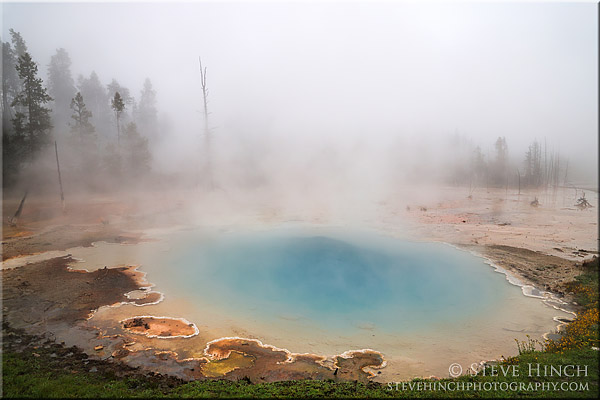
The image above is of Silex Spring and was taken on Sunday before the floods in between rain events.
 steve hinch photography