Biscuit Basin

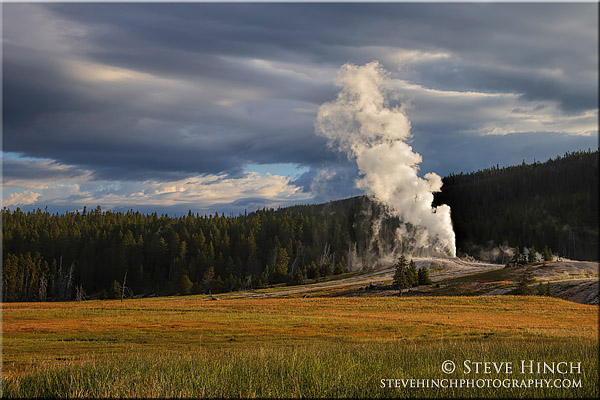
Wall Pool, part of the series of hot springs that include Black Diamond and Black Opal, was created by steam explosions between 1902 and 1912.

Biscuit Basin in Yellowstone National Park made headline news last week when a geothermal explosion of Black Diamond Pool sent visitors fleeing. The small geyser basin will remain closed for the rest of the summer. Geothermal explosions are not a rare occurrence in Yellowstone and, according to park geologist Mike Poland, happen as frequently as one or two times a year. Black Diamond Pool had previously experienced a steam, or geothermal, explosion in 2009 and Porkchop Geyser in Norris Geyser Basin exploded in 1989. In fact, at Biscuit Basin, the entire Wall Pool/Black Diamond Pool/ Black Opal Pool complex were created by steam explosions that occurred between 1902 through 1934, according to the book The Geysers of Yellowstone by T. Scott Bryan.
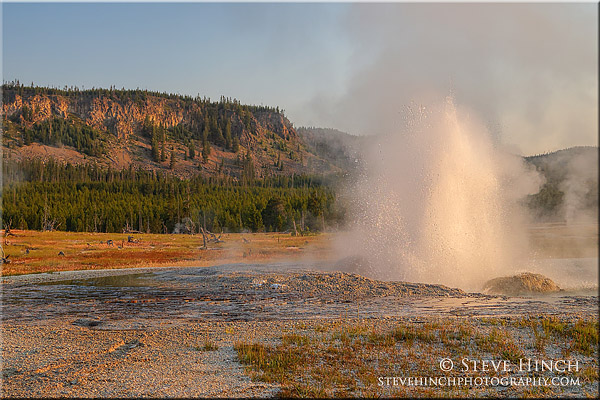
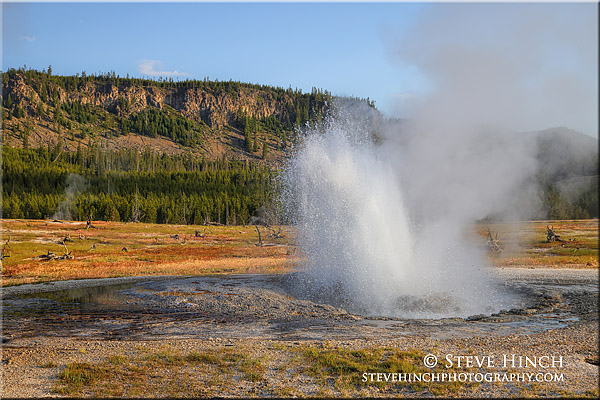
Jewel Geyser in Biscuit Basin. Jewel erupts on average every 4 to 12 minutes in a series of 1 to 10 bursts.

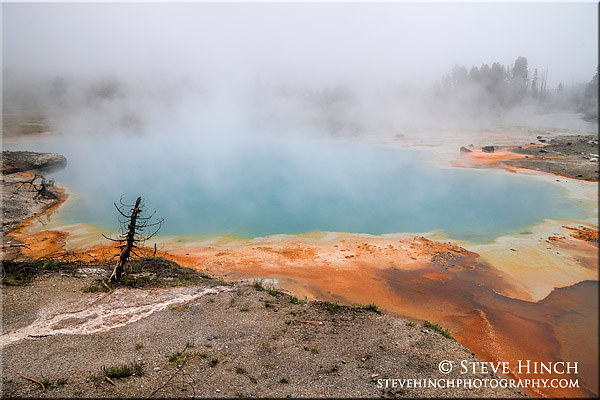
Biscuit Basin is one of my “go to” locations for sunrise when I have a book/print signing in the lobby of the Old Faithful Inn. The lead photo to this article depicts what was Wall Pool prior to the July 23rd steam explosion. Based on aerial photographs provided by the National Park Service, it appears Wall Pool and Black Diamond Pool are now one large pool and the Park Service, at least for now, has labeled it Black Diamond Pool. Above, Jewel Geyser is largest of a couple of small but regular geysers that can be found at Biscuit Basin. And below is Sapphire Pool, arguably one of the prettiest hot springs in Yellowstone. Though it sits only a few dozen yards from the Black Diamond Complex, based on aerial images, it appears unaffected by the event of July 23rd.
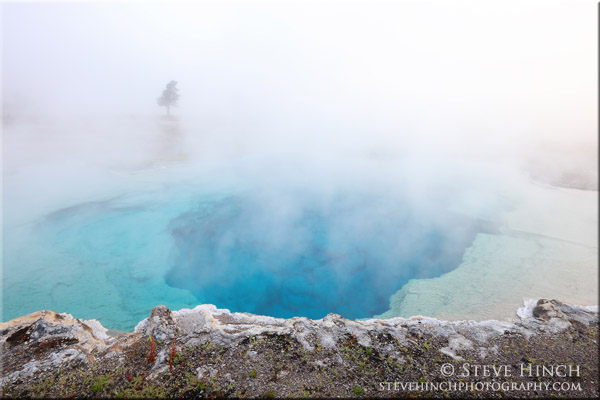
Sapphire Pool. Based on aerial images, this pool appears largely unchanged by the events at nearby Black Diamond Pool, just several yards to the east.

This Past Winter…

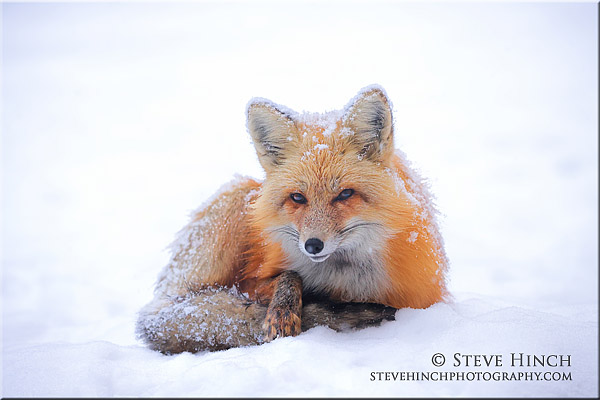
Red Fox. Canon R5, 500mm, tripod, 1/200 @ f5.6, ISO 3200

Since, until recently, I hadn’t posted anything new, I’ll go back to the winter for this one. With the low snowpack we had, I actually didn’t do any photography until March when I encountered this red fox relaxing in the snow. For wildlife photography regardless of time of year, I’ll expose the image for the subject, in this case the fox, and let the background exposure go where ever it ends up. With snow that’s not a bad thing since it’s white and if it overexposes that’s not a bad thing.

May’s Aurora (verticals)

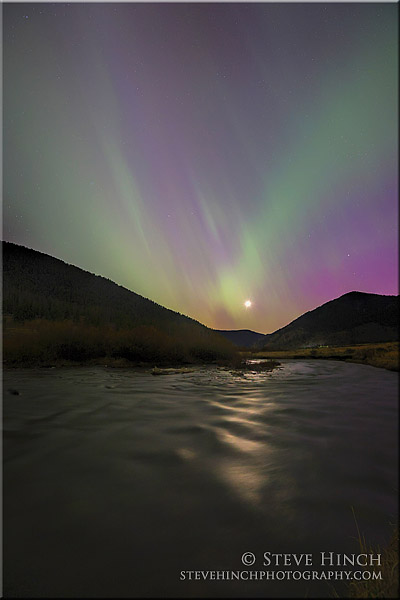
Aurora over the Gallatin River in Yellowstone. Canon R5, 16mm, tripod, 10 seconds @f5.6, ISO 5000

Back in May much of North America experienced a very strong solar storm that produced some nice aurora displays. I had to be in Bozeman that night so decided to hang out in Yellowstone National Park between West Yellowstone and Big Sky to witness the event. Typically this far south, any type of light source, including the moon, can really hinder viewing but on this night I was even able to use the moon in an image as seen above.

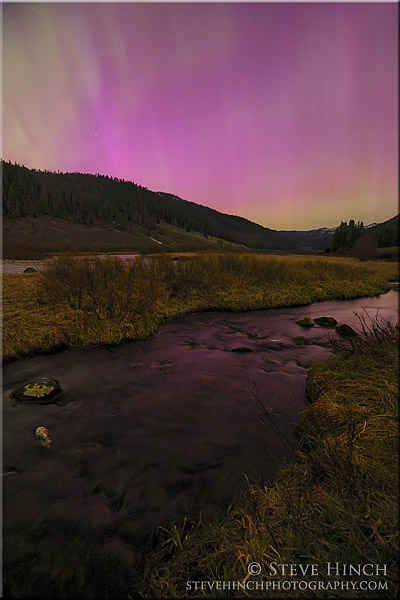
Side channel of the Gallatin River. Canon R5, 16mm, tripod, 10 seconds @ f5.6, ISO 5000

As the night went on, the display weakened and strengthen, as is normal, and I moved around to different areas to capture different scenes. This side channel of the Gallatin River made an interesting foreground for some of the best color displays of the evening.

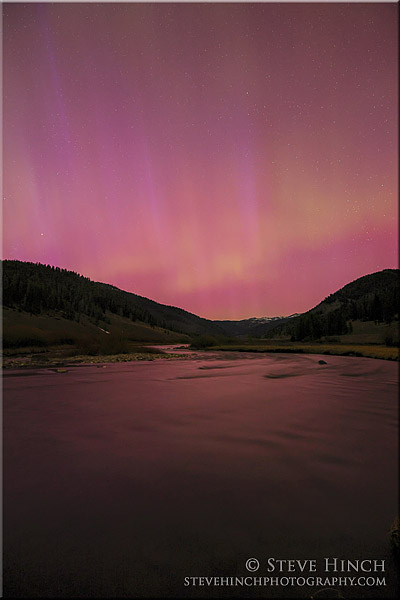
Gallatin River. Canon R5, 16mm, tripod, 10 seconds @ f5.6, ISO 5000

This was probably about the peak of activity that I recorded with the pink sky and purple columns dancing among the green waves. The pink really drowned out the green at this point however. As it turned out, I had wanted to photograph the aurora up here, so this worked out well but I do have some potential locations in the main part of Yellowstone that I want to use for the next aurora event. I’ll do one more post from the May event with horizontal compositions next week.

Lion Geyser

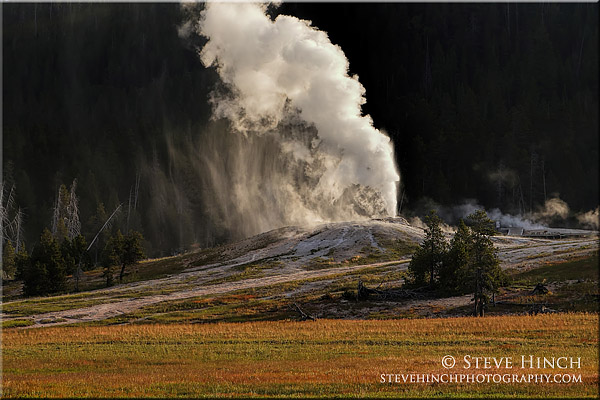
Lion Geyser. Canon R5, 200mm, handheld, 1/800 @ f11, ISO 800

When I do book/print signings at Old Faithful, I enjoy arriving early to spend time wandering the various geyser basins. Lion Geyser has always been one of my favorite geysers, whether from up close on the boardwalk or from the paved path that runs in front of the Inn. I think I prefer photographing it in the morning from the pave path with a telephoto lens. I love compressing the scene with the geyser in eruption backlit by the rising sun. Lion Geyser doesn’t have a prediction posted so it’s highly variable if and when one might see it. I’ve photographed a few eruptions under these conditions, now if only I could get a herd of bison to graze in that meadow!

Lion Geyser. Canon R5, 55mm, handheld, 1/800 @ f11, ISO 800

Yes, I’m Still Here…

Jewel Geyser. Canon R5, 45mm, handheld, 1/1000 @f11, ISO 1600

I am rarely using social media anymore and recently removed the Steve Hinch Photography facebook page. I am still shooting, though mostly landscapes, and I do intend to start posting again here on my blog on a regular basis. The image above was taken a few days ago and shows Jewel Geyser in eruption in early morning light.