Gray-Crowned Rosy Finch

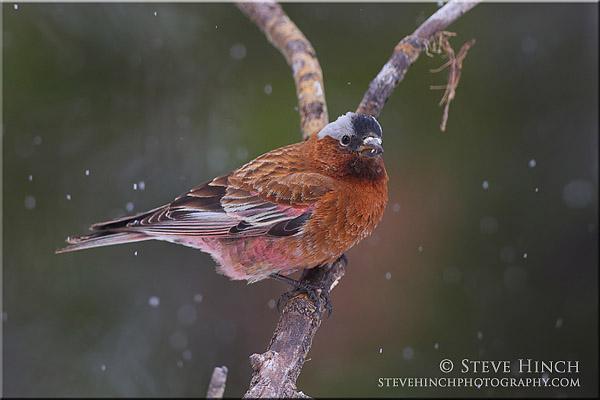
Gray-crowned Rosy Finch. Canon R5, 500mm, tripod, 1/640 @ f5.6, ISO 1600

I write a lot about migrations, particularly those of birds. In part it’s because birds travel incredible distances when it comes to migration. I think one of the reasons I find birds so interesting is due to the fact that you never know when you might see something new. I’ve waited a long time to see a gray-crowned rosy finch. Earlier this week, I finally was able to add this species to my life list. These birds nest primarily in Alaska, but they also call the highest elevations of the Rocky Mountains as their summer home as well. If you’re lucky, you may see one as you drive over the Beartooth Highway near Yellowstone National Park. With the recent winter like storms we’ve received this week, these birds have been spotted throughout the area foraging for food. Once more spring-like weather returns, they’ll head off again to their alpine summer ranges.
Another Baby

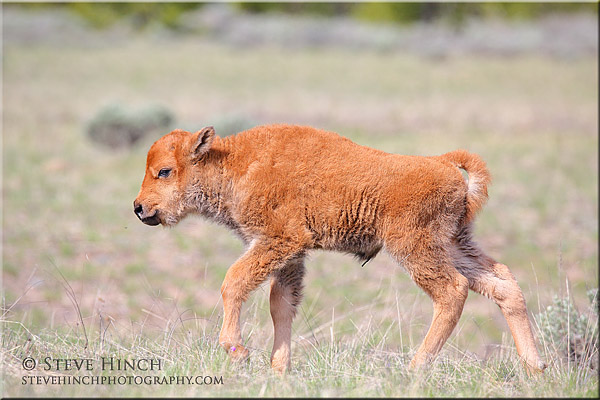
Bison calf. Canon 5d3, 400mm, beanbag, 1/1000 @ f8, ISO 800

Besides photographing some birds in the backyard, I haven’t photographed since some time in mid-March. I’m hoping to get back out a bit in a few weeks, but for now I’m still posting some older images. Since my last two posts have been baby animals, I thought I’d continue that trend today. I haven’t heard of any bison calves being seen yet this Spring but it’s just a matter of time. Yesterday I did my first presentation since 2019 and bison were a popular topic. The audience was my daughter’s pre-K class and they were perhaps the most enthusiastic audience I’ve ever had.

In the Flowers

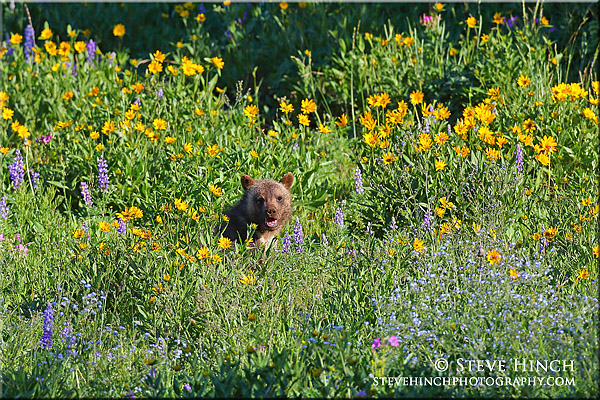
Grizzly cub. Canon 7d2, 500mm, tripod, cropped, 1/1600 @ f5.6, ISO 400

During the summer a few years back I wanted to get up into the mountains and photograph the wildflowers. Momma grizzly and her cub were up there too but for a different plant. When the clover is grown, it is a preferred food of wildlife as it is high in protein and mom was teaching her cub to find it and eat it. This photograph was taken from the side of the road with a small group of people and with a long telephoto lens. While a lot of grizzly, or brown, bear images are taken in various Alaska national parks away from the roads, those are typically under highly controlled situations. It certainly isn’t wise to hike away from the roads or to get close near the roads as bears can be highly unpredictable.

That Time of Year

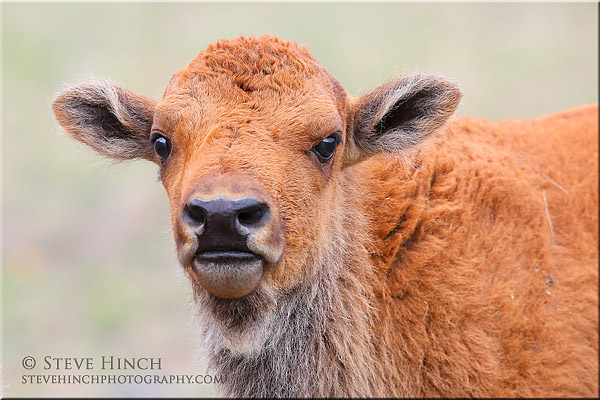
Bison Calf. Canon 5D3, 500mm, beanbag, 1/400 @ f8, ISO 400

It’s April and that means it’s time for babies to start appearing in the meadows and forests. Among the first babies to start showing up are bison calves. This one was photographed a few years ago and in April a bison calf sighting is possible though still a bit rare. By May these little ones will be running and playing all over the place. Bison are certainly one of my favorite photo subjects but also one of my favorite wild animals and it’s such a privilege to see these incredible animals. They can be dangerous though, as can all wild animals, and even this little guy was photographed from my using a bean bag to support a long telephoto lens.

Farewell to Winter

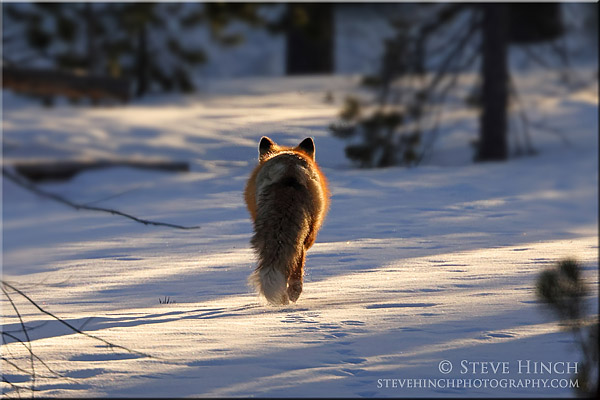
Red Fox. Canon R5, 400mm+ 1.4 TC, handheld, 1/3200 @ f8, ISO 3200

This was the last fox image I was able to photograph this past winter and was also the only image I was able to get as this fox just kept going in the “wrong” direction. I had hope it might stop right here in this late day light, but he/she just kept on going. It won’t be long until kits start emerging from their Spring dens but for now, I thought we could close out winter with this image.

Migration

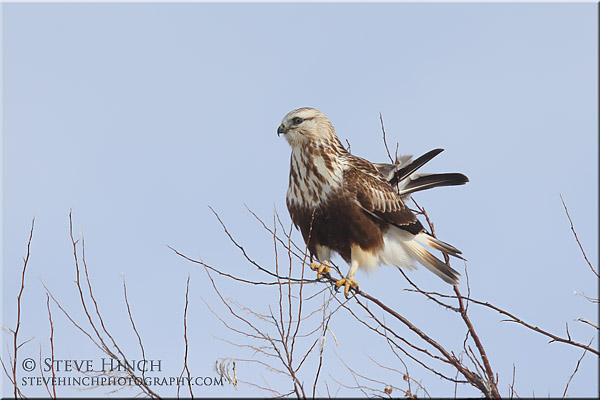
Rough-Legged Hawk. Canon R5, 500mm + 1.4 TC, beanbag, 1/3200 @ f8, ISO 400

The Spring bird migration is under way. I’ve recently noticed the return of Cassin’s finches in the past few days, along with a robin. Yesterday, my daughter and I also saw our first mountain bluebird of the year. Photographed above is a rough-legged hawk that I saw back in February. These hawks winter in southern Canada and parts of the United States and should now be moving back north to their artic breeding grounds where they spend the summer months. I always find it special when I’m able to find artic summer residents in their winter range, so I usually go out looking for these hawks during the winter months. This one had landed awkwardly on the branch and it’s tail feathers were ruffled against another branch. The rough-legged hawk is one of only three species of raptors to have feathers on their legs down to their toes with the other being the golden eagle and the ferruginous hawk.

Looking Back…

Trumpeter Swans. Canon R5, 105mm, handheld, 1/2500 @ f8, ISO 1600

The first day of Spring was earlier this week and the local temperatures have certainly reflected that as they’ve reach into the upper 40s and low 50s. That has of course resulted in a lot of snow melt, not that we had a lot of snow this winter comparatively. I had a lot of luck with certain species over the winter months including trumpeter swans. With the conditions what they were, cold, misty and everything covered in frost, I opted to shoot this scene wider than I might otherwise because the moment was just as much about the entire scene and not just a close up of the swans. I was able to photograph these swans on several different occasions and shared a couple of other moments previously, but I felt this one was worthy of sharing as well.

Windy Day

Red Fox. Canon 5d4, 500mm, braced against a snowbank, 1/1250 @ f8, ISO 500

We have a lot going on currently in our personal lives right now, so I haven’t been out shooting in a while and probably won’t be shooting much over the next month or so. I’ll keep posting at least once per week though with at least an older image like this one. This taken a couple of winters ago in Yellowstone National Park on what was a very windy afternoon as a cold front began to move into the area. The was bracing against the wind but was no doubt enjoying it even less than I was at the time. Interior roads in Yellowstone have now all closed for the season and plowing is under way so they can reopen on April 15th. The north entrance out through Lamar Valley is open year round and that part of the park can almost always be accessed.

Metal Print Price Increase

Moose. Canon R5, 300mm, handheld, 1/800 @ f5.6, ISO 1600

I really hate to raise my prices and have tried to do so minimally over the years but with aluminum shortages and supply chain issues, the price of metal has gone up significantly. As a result I unfortunately have to raise the price of all the metal prints on my website. The new prices will go into effect on March 31st. I chose that date so that anyone on the fence about ordering can still do so at the old prices for the next two weeks before the new prices take effect. Fortunately, for now, photo paper prints are still the same price as they’ve been for years. The photo above was taken a few weeks ago. It was a cold morning as this young moose foraged in the river for vegetation growing in the icy water.

Yellowstone’s Winter Season Winding Down

Bison. Canon 5D4, 600mm, handheld, 1/800 @ f8, ISO 400

Roads in the interior of Yellowstone National Park have begun to close to oversnow travel, marking the end of the winter season. All interior roads will close on March 15th and will then start re-opening on April 15 for the 2022 summer season. The park can always be accessed year from Gardiner, Montana, up to Mammoth Hot Springs, and then out through Lamar Valley to Cooke City, Montana. I haven’t posted a bison photo lately and decided to share this one from a few winters ago. I had hoped the bison would walk in front of this section of snow as I felt it would be a great background. Most of the time, the animals don’t do what I hope, but on this day, the bison was cooperative.