Another Fox

Red Fox. Canon R5, 500mm + 1.4TC, tripod, 1/1000 @ f5.6, ISO 1600

While I haven’t had luck photographing some of the more rare animals I’ve seen tracks of so far this winter, I have had luck some some others. While I managed to track and even see an ermine, they still remain a holy grail of winter photography for me as I haven’t been able to get an image. But fortunately, red foxes provide an occasional opportunity. I say fortunately because they’re probably my favorite mammal to photograph. I’ve been using a Canon R5 for a while now and, despite some issues with it, I’ve enjoyed using the camera as it has some great features. It does handle higher ISOs really well and the large files allow for decent cropping while still allowing for a large enough file for printing. This is great for birds but also is helpful with all wildlife as I can stay a respectable distance away and crop the final image as I did here.
Nesting Season

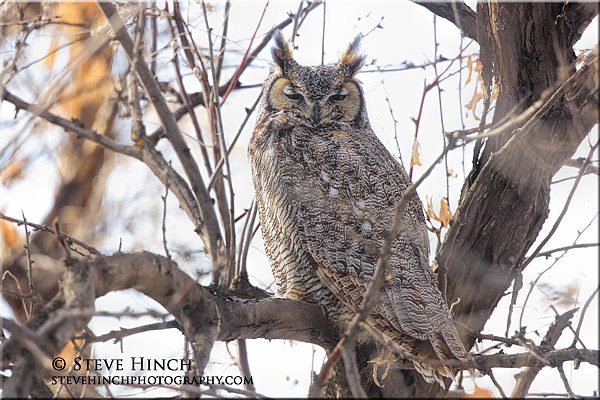
Great Horned Owl. Canon R5, 500mm + 1.4TC, tripod, 1/640 @ f8, ISO 800

It’s March 4th and even though winter still has a month or so to go, hopefully, Spring is certainly beginning to make it’s presence known. Many owl species, such as this great horned owl have, or are about to, begin their nesting season. So if you’re fortunate enough to stumble onto an owl do be very respectful of it and it’s habitat. Any disturbance may cause the parents to abandon a nest that may already have eggs on it. This owl was spotted while I was hiking along a trail through a cottonwood thicket. Once spotted I didn’t leave the trail and did not attempt to approach closer, but took a couple of images and spent less than 5 minutes in it’s presence.

Yellowstone National Park Turns 150 Years Old

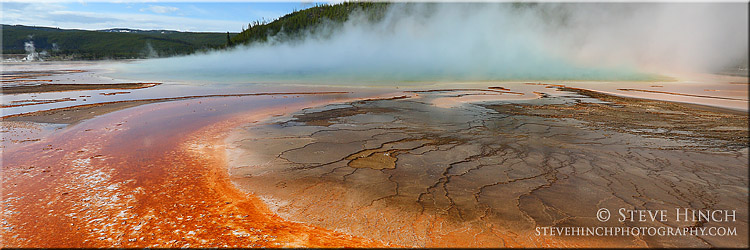
Grand Prismatic Hot Spring. Canon 5D3, 16mm, handheld, 1/320 @ f16, ISO 400

150 years ago today on March 1st, 1872, President Ulysses Grant signed legislation that established Yellowstone as the world’s first national park. Yellowstone was set aside not because of the abundant wildlife which is a draw for many of the millions of people who visit today but because the incredible and unique geothermal features such as Grand Prismatic Hot Spring seen above. Yellowstone National Park is home to over 10,000 geothermal features, roughly half of the total number in the entire world. Happy birthday Yellowstone!

Sunflower

Rufous Hummingbird and Sunflower. Canon R5, 500mm + 1.4TC, tripod, 1/2000 @ f5.6, ISO 1600

The sunflower is the national flower for Ukraine. I wanted to post this today to honor the strength that the Ukrainian people have shown in the face of a horrible tragedy and to honor those that have already lost their lives. I was motivated to share this image due to a story that has been shared by some British news outlets where reportedly a Ukrainian woman handed a Russian soldier a some sunflower seeds and told him to “put them in his pocket so they will grow when you lie here.” I’ll post a link to the article below though it can be found through a google search as well. This sunflower is one of many I have growing in my backyard during the summer months. The hummingbirds that also frequent my yard and the flowers I grow seem to enjoy the sunflowers as well. Here’s the link: https://www.independent.co.uk/news/world/europe/ukraine-russia-soldier-woman-confrontation-b2022993.html

Not Quite

Madison River. Canon R5, 16mm, handheld, 1/250 @ f11, ISO 1600

Even though I need to ski or snowshoe into this location, it doesn’t take long for me to get here. So often when conditions look good from home, I’m able to pack up and arrive here before sunrise. I love this spot but have yet this winter to get the dramatically colorful sky I want. The morning I took this image, I thought for sure conditions were right as there were a lot of clouds above but the horizon looked clear. One challenge living in the mountains is that the horizon can rarely be completely seen to know if there might be a low layer of clouds that will kill the color at the last minute. That’s what happened here. Just as the color started, the sun hit a low layer of clouds that I couldn’t see due to the mountains in the distance and everything went grey and dull. I waited around and when the sun rose above the mountains, a little color was put back into the scene. I’ll keep trying as conditions look promising, but there’s not a lot of winter left so I may have to continue this quest next winter.

The King

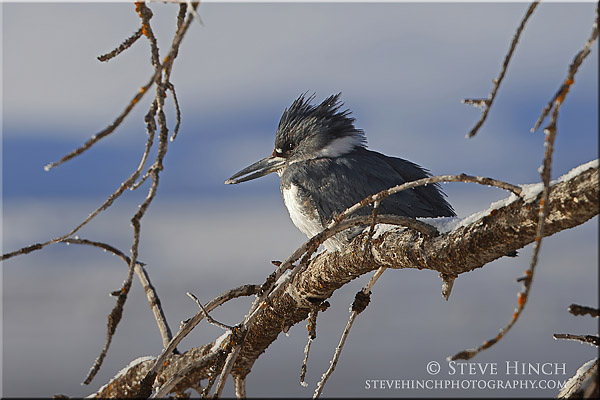
Belted Kingfisher. Canon R5, 500mm + 1.4TC, beanbag, 1/2500 @ f8, ISO 400

Since it’s Tuesday I thought I’d swing back around to a bird image. This time, meet the king! The Belted Kingfisher is probably one of the harder birds I’ve personally tried to photograph. This is on the third time I’ve been successful trying to photograph one. They usually fly off before I can even get set up or, as has happened many times, they fly off just as I’m about to shoot my first frame. I photographed this guy from my vehicle, using it as a photo blind, and balanced my lens on a camera support beanbag. Life in winter can be tough. It was right about zero degrees farenheit and you may notice this bird has ice on the tip of it’s bill. Kingfishers, as their name implies, eat fish so they spend a lot of time diving into the water after their prey. Fortunately, his bill wasn’t frozen shut and once the sun warmed up, the ice did eventually melt off.

One Moose Two Moose

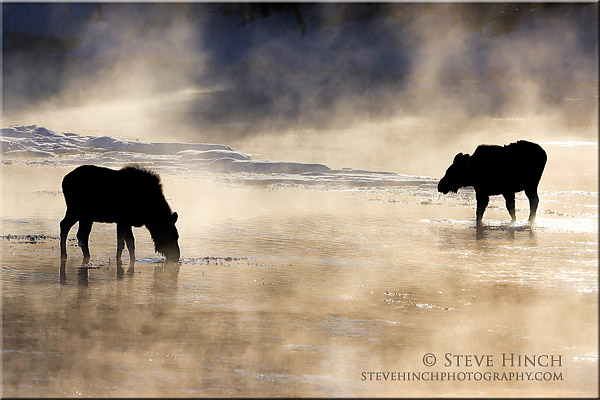
Two Backlit Moose. Canon R5, 240mm, handheld, 1/5000 @ f8, ISO 400

If the earlier backlit moose image I posted wasn’t good enough, maybe two backlit moose will be better. This was actually taken the same morning as the image I posted last week with that solo moose being the one on the left in this image. Again, I preferred to silhouette the moose and let the warm tones dominate the scene, which was quite stunning at the time.

Outside Looking In

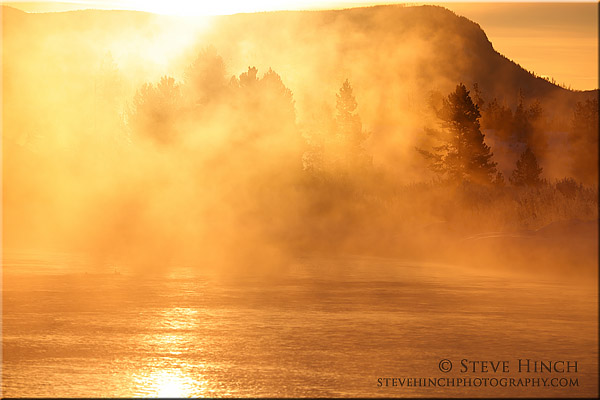
Madison River and Mount Jackson. Canon R5, 300mm, handheld, 1/1000 @ f11, ISO 320

Outside looking in. I was in the national forest area outside Yellowstone National Park photographing sunrise but the distant “peak”, Mount Jackson, is inside Yellowstone National Park. Mount Jackson is actually an ancient lava flow and not a peak at all. At the time I shot this image, I was more interested in the foggy backlit pine trees and shot several compositions zoomed in more tightly on the trees. I zoomed out a bit to give myself some cropping options later and actually preferred this image with all of Mount Jackson visible. If I had known at the time I would prefer this view, I might have included a little more room at the top of the image. At the time I shot it, I didn’t want to include the sky because it would be overblown. The brightest part of of the sky above the plateau is where the sun was rising.

Stretch Your Wings!

Trumpeter Swans. Canon R5, 400mm, handheld, 1/1600 @ f8, ISO 1600

Ok, I really like backlighting, or at least variations on it. Backlighting iss when the subject is between me and the sun when the sun is really low, in case you needed me to say that, which you probably didn’t. And I also really like fog. Not super thick fog that blocks out the sun completely but more of a misty kind of fog, or in this case, mist rising off the river. I’ve been photographing subjects in backlit, misty conditions a lot lately. So, starting with the moose image I shared on Sunday, I’ll probably be sharing a few more misty backlit images. Swans are great for this kind of light since they’re white and still show a lot of detail in their plumage where as the moose I shared recently is a very dark animal to begin with so it goes almost completely black, though I still love that image. I’ll also be making one extra post a week for a little while, up from 2 per week to 3 as I have a variety of images I want to get out to you as I appreciate the feedback I receive on my blog and social media.

Winter?

Backlit Moose. Canon R5, 400mm, handheld, 1/5000 @ f8, ISO 400

I mentioned previously that we didn’t have any snow on the ground at all until it started snowing on December 10th. Then it snowed almost daily through January 8th, putting about 2 feet of snowpack on the ground and more in the mountains. It’s now February 13th and we haven’t had any measurable snow since January 8th and the local news reported that all but two mountain watershed monitoring stations are reporting snowpack at about a foot less than normal. I’ve seen a few photos showing up in my facebook newsfeed of bison and the photographer refers to them as “happy” due to the low snowpack. I can’t say whether it makes them happy or not, but the ecosystem is heavily dependent on winter snowpack for moisture that sustains the rivers and meadows well into summer. The entire region has been under a hard drought and this winter certainly hasn’t helped that and in the long term, the drought is more damaging to the wildlife than winter snows. At this point, we can only hope for some big snowstorms to come through and add moisture into the watersheds though with each passing day it seems less likely. I photographed this moose last week. Moose are dependent on wetlands and marshes for food sources. The winter snow fuels these high elevation wetlands the moose need.