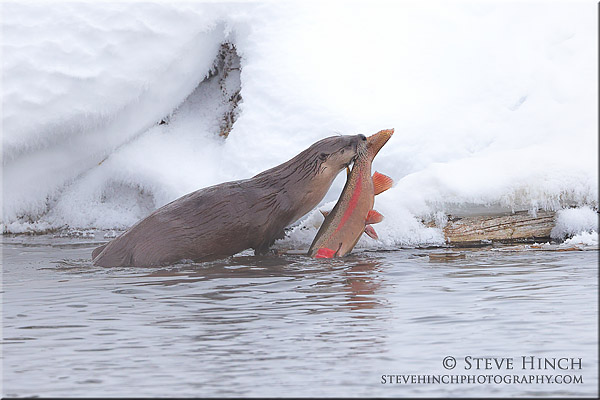
River Otter with Cutthroat Trout. Canon R5, 400mm, handheld, 1/500 @ f8, ISO 1600
This is another image of the otter I posted last week during the same encounter. This was the second fish the otter caught while I was watching and photographing it. Previously it had caught a rainbow trout and successfully landed it and ate most of it. This cutthroat trout was much larger and the otter was having more trouble with it. The fish was finally brought to the bank but the otter didn’t realize the fish wasn’t done yet and just as I shot this image, the fish began thrashing about. The otter lost it’s grip and they both went into the water with the fish escaping.
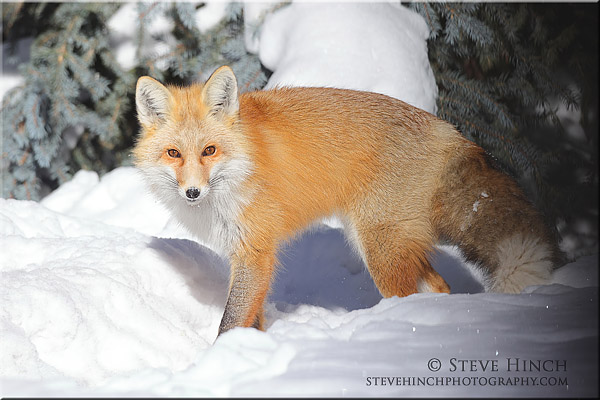
Red Fox. Canon R5, 500mm + 1.4TC, tripod, 1/4000 @ f5.6, ISO 800
I’ve seen plenty of fox tracks pretty much everywhere I’ve been skiing and snowshoeing but finding the maker of the tracks isn’t always so easy. And it’s usually a matter of the fox coming to me not me finding it. Since both skis and snowshoes make a lot of crunchy noise no matter how quiet I try to be, the wildlife usually know that I’m coming. When on skis or snowshoes I prefer to go light and only carry a 100-400mm lens as my longest since it’s a lighter, more mobile option. And, while I haven’t owned that lens long, it’s impressed me so far. But occasionally I’ll take the heavier gear and some times it pays off.
River Otter. Canon R5, 400mm, handheld, 1/500 @ f8, ISO 1600
In a post previously, I had mentioned I’d been seeing a lot of tracks in some of the areas I’ve been snowshoeing/skiing but hadn’t had much luck finding the animals who had made them. That changed this week. One of the tracks I had seen regularly were of a beaver who had been feeding on willows. As I photographed a colorful sunrise, the beaver found me and swam right through the scene I was photographing. Unfortunately, while he hung around for a while, he did leave before the light was good enough for me to try to photograph him. But a short time later, I came across this river otter. The otter, seen here sliding across some ice on the river, caught a nice sized rainbow trout and decided to haul it out and eat it right across the river from me. As it slid back into the water after finishing it’s meal, it almost immediately caught a much larger cutthroat trout. After some struggles, the otter was able to get the second trout to the riverbank but the fish still had a lot of fight left and was able to struggle free.
Bald Peak. Canon R5, 400mm, handheld, 1/640 @ f11, ISO 800
Some times we don’t have to travel great distances to take photos that look like they come from some exotic locale. This image was actually taken last week while I was driving my daughter to daycare. I could see the sky was lighting up dramatically and she even said “wow dad, the sky is amazing.” Openings in the clouds allowed the mountains to be dramatically lit up and even though the summit is covered, I thought the light on this snow-covered ridge was pretty cool.
I’ve spent many mornings lately out on a pair of snowshoes following tracks or the light. It’s typically been around 0°F plus or minus a few degrees which is great because it causes some nice conditions for taking photos. While I’ve unsuccessfully tracked several mammal species, these trumpeter swans keep getting my attention as they’re often in some beautiful light and scenery.
Sun Dog over the River. Canon R5, 35mm, handheld, 1/6400 @ f11, ISO 640
I took a sunrise snowshoe a few mornings ago and the air was full of ice crystals. When conditions are right a parhelion, or more commonly called a sun dog, may occur. It’s basically the same principle as what causes a rainbow and is the diffraction of sunlight through the ice crystals in the air. This image actually shows ice crystals in the air when viewed full size (but not at the size I post on the internet unfortunately). You may notice the two Barrow’s goldeneyes in flight beneath the sun dog as well which was another element I thought made this image worth sharing.
Bison. Canon 5d3, 150mm, handheld, 1/200 @ f11, ISO 800
After posting images of winter and snowy bison, I thought I’d share something “warmer.” As I was going through some older photos, this one made me pause and smile. I personally like photos of animals in a pretty landscape with nice light. The hint of the ridges peaking through the fog in the upper right corner also drew my attention as I looked over this image as I wondered if I should share it. So here it is and I hope it makes you smile as it did me.
If you’ve paid attention to my blog or facebook page, then you’ve noticed I haven’t posted location information for many, if not most, of the images I share. The main reason for this is because I feel social media in general has had a negative impact on our wildlife and wild places and I prefer not to post specific location information in order to protect these places and animals. A couple of examples of what I’m talking about is that visitation in Yellowstone in 2006 was just under 2.9 million visitors. In 2021, Yellowstone had approximately 4.4 million visitors from January through October alone! Social media alone isn’t responsible for that of course but it certainly has had an impact. When there was less cell coverage in the park, bear and wolf jams consisted of people who were fortunate enough to come across them. Today, texts messages go out and people even live stream wolf and bear sightings in the park. This not only increases the crowds at these sightings but also puts the animals at risk. A few winters ago, some trumpeter swans were gaining attention at a popular birding location near Bozeman, Montana. A short time later someone shot the swans (this swan is not from that location and is very much alive at the time of this posting). While poaching in Yellowstone is rare, it does happen. So unless something is very obvious, such as a geyser like Old Faithful, I usually don’t post the location information. After all, my blog and my facebook page are about photography, not travel destinations, and I prefer to keep our wildlife and wild places safe.
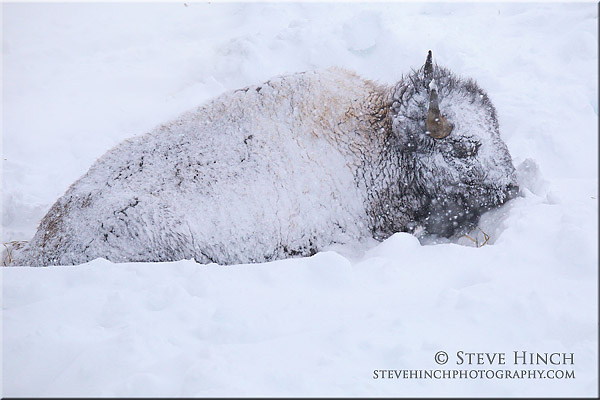
Bison Covered in Snow. Canon 5d4, 350mm, handheld, 1/640 @ f8, ISO 800
We’ve had a lot of snow over the past month. Snowstorms have shutdown highways and interstates and slide-offs along the local roads coming into town have been very common. That said, prior to December 12, we had no snow on the ground, which is the first time I can remember not starting December with some kind of snow base. The snow has taken a break this week, though it does need to return. The Yellowstone ecosystem is dependent on the winter snowpack as a source of moisture well into the summer. Without it, fields dry up, grasses die, and fires are a high risk. While the bison above certainly looks miserable, it is well insulated against the blizzard in which I took this photo a few winters back. The ice and snow builds up on it’s coat because it is so well insulated that it’s losing very little heat. The entire herd looked like this and they were hunkered down against the wind that was driving the snow. Winter is certainly a tough time for wildlife in Yellowstone but without the snow, there would be little to eat in the summer.
Mountains, Cottonwoods, and Aspens. Canon R5, 24mm, handheld, 1/200 @ f11, ISO 500
This past September was pretty stunning as the autumn colors seemed to last a lot longer than typical. I watched these trees almost daily, waiting for them to hit peak color. Unfortunately, the smaller willows peaks much earlier but the aspens and cottonwoods here peaked together, which doesn’t always happen. I would have preferred some colorful clouds in the sky but all in all, this was a pretty peaceful moment and one of many enjoyable photo endeavors this past September.




 steve hinch photography