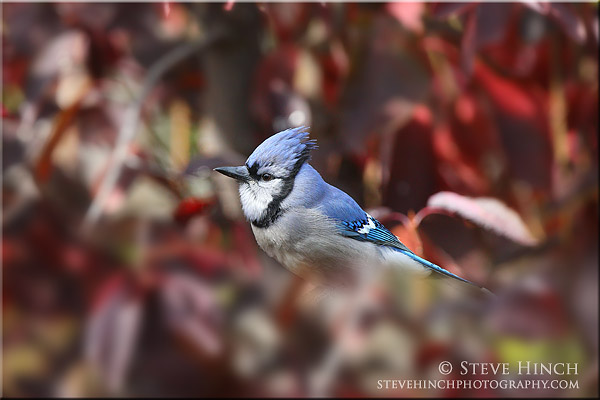
Blue Jay. Canon 5d4, 500mm + 1.4 TC, tripod, 1/1250 @ f5.6, ISO 1600
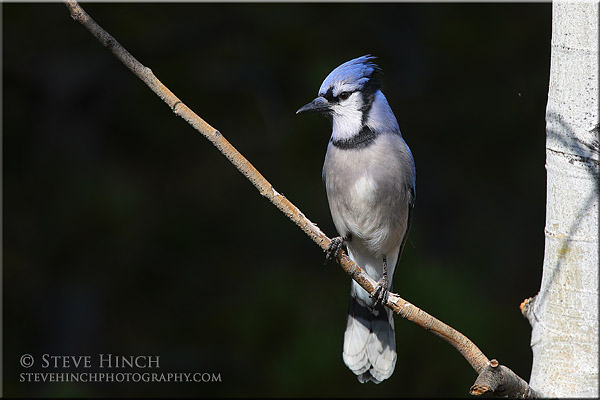
I’ve been eagerly waiting to see if the blue jays would return again this autumn after the pair that wintered here left some time in early March. In 2019, they showed up on October 12th. This year, they showed up on October 10th. And not only did they show up but they brought a juvenile with them to make at least three blue jays. In the winter, I take part in Project Feederwatch, which records weekly bird sightings. I noticed that they’ve updated their range map this year to indicate blue jays now winter in this area, no doubt in part due to others who also report blue jays in their yards through the winter.
Blue Jay. Canon 5d4, 500mm + 1.4 TC, tripod, 1/3200 @ f5.6, ISO 800
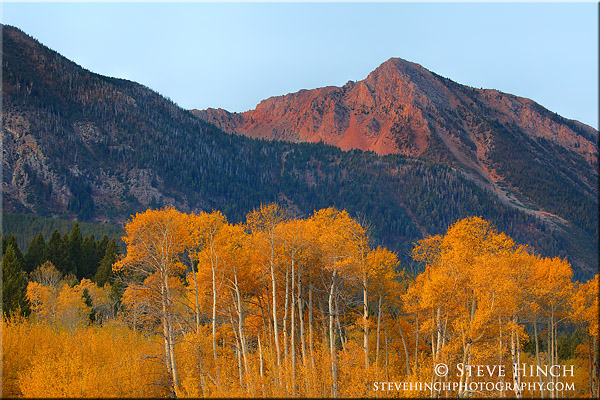
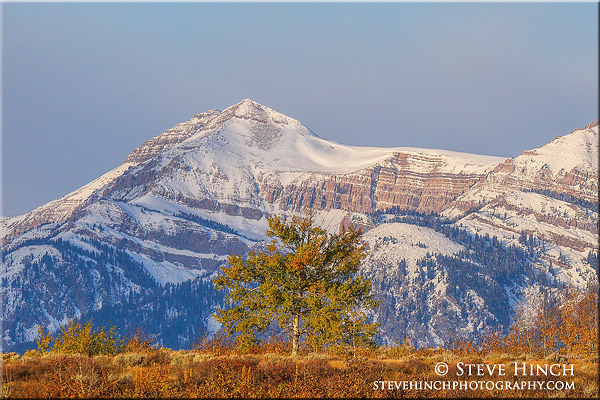
Aspens and Mountains. Canon 5d4, 150mm, tripod, 1/100 @ f11, ISO 800
Autumn color in the Montana mountains is starting to wind down, just in time for some winter weather to arrive. In the lower elevations of the state color is reaching peak. This image was taken last week when this stand of aspens were displaying their brilliant golden color at sunrise.
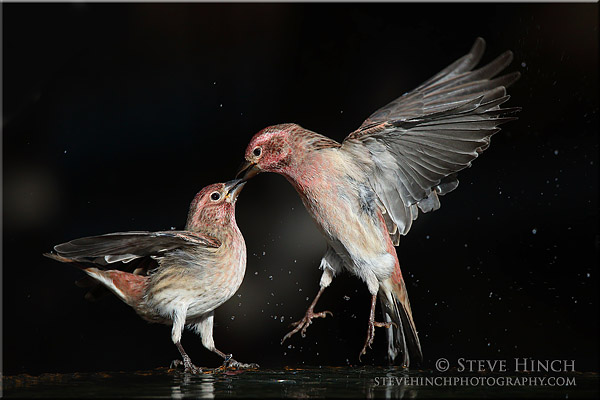
Male Cassin’s Finches. Canon 5d4, 500m + 1.4 TC, tripod, 1/6400 @ f5.6, ISO 800
I haven’t had much time lately for backyard birding as I’ve been trying to take advantage of the short autumn color display of the aspens. But yesterday morning I spent an hour or so watching the variety of birds coming to the bird bath. It’s been pretty dry lately so the bird bath has been pretty popular. While most summer migrants have moved on, I still have plenty of year-round residents coming in, including these two Cassin’s finches. As the photo shows, they don’t really like to share the water.
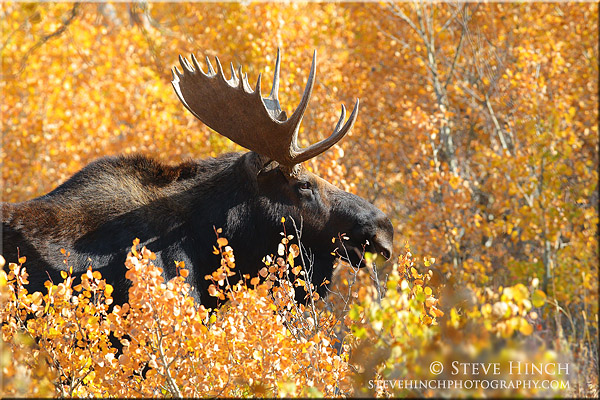
Aspens are at peak color right now and I’ve been out quite a lot trying to photograph them. The last few days my attention was turned back to wildlife however as I’ve seen quite a lot of great animals. This big bull was moving through a beautiful stand of aspens in pursuit of a cow moose. He wasn’t in any real hurry and I was able to photograph him in front of several nicely color aspens.
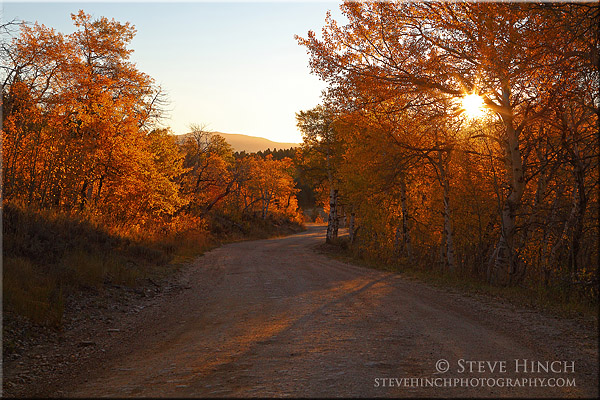
Aspens along a Backcountry Road. Canon 5d4, 45mm, handheld, 1/80 @ f22, ISO 800
The annual quest to find the best autumn color has begun. Living in a place where pine trees are by far the most common type of tree can make finding great scenes with autumn color difficult. But it is rewarding when it comes together. Aspens provide most of the color with cottonwoods a close second. Unlike other parts of the country, most of the leaf color tends to be yellow. I’m also not real skilled at creating nice sun stars, but the position of the sun in the above photo required some attempt at it.
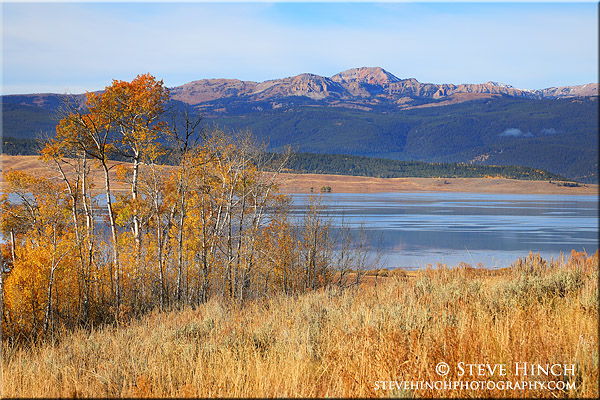
Aspens above Hebgen Lake. Canon 5d4, 105 mm, handheld, 1/1000 @ f11, ISO 800
I found the above scene later in the day than what I might normally want to photograph it. If I thought the leaves would hold then I’d be tempted to go back in earlier light, but I liked the scene all the same.
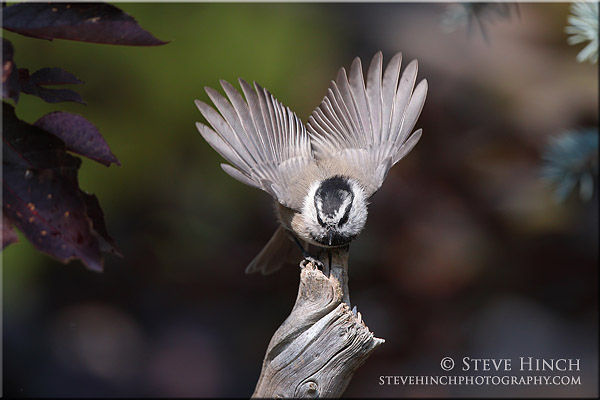
In July, I made a post about camera setting I use. That article can be found here. I intended to make a follow-up post much sooner than now, but I finally found the time to write a little more than I usually do. Previously I wrote about the camera type, white balance, shooting mode, and metering. This time I’ll touch on shutter speed, aperture, and ISO. These three settings all tie together. I’ll start with shutter speed. Shutter speed is how fast the camera’s shutter opens and closes. The shutter opens to allow light to reach the sensor. I’m most concerned with shutter speed when photographing wildlife and usually I’m looking for a fast speed to stop movement. In the above photo of the mountain chickadee, I need a fast shutter speed to capture the fast moving bird. In order to achieve the fastest speed, I need to also understand the aperture and ISO. A wide open aperture and higher ISO help to attain a fast shutter speed.
Mountains and Fall Colors. Canon 5d4, 300mm, tripod, 1/500 @ f11, ISO 400
Aperture. While in the chickadee photo I was needed the fastest shutter speed possible, in the above scenic, shutter speed wasn’t important. What is important is that both the near tree and distant mountain are in focus. The camera’s aperture setting is how large the opening will be to let in light to the sensor. The smaller the number then the larger opening. For example, f5.6 is a wide or large opening while f22 is a small opening. Large openings such as f4 or f5.6 also means that the range of focus is very narrow meaning parts of the photo further away from the focus point will be out of focus. A smaller aperture such as f16 means there will be a greater range of focus and more of the scene will be in focus. This is important in both of the above photos because in the chickadee photo, not only do I need a fast shutter speed but I also want the background to be out of focus so the bird stands out well. By using a large aperture of f5.6, I not only get a faster shutter speed but also get an out of focus background. In the mountain photo, I need a greater range of focus. Since there is relatively no motion in the scene and I am using a tripod then I am not as concerned with shutter speed, so I am choosing a f-stop, or aperture setting, that gives a greater range of focus, in this case, f11. ISO. The third part of the equation is ISO. Higher ISO’s result in more noise in the photo file which is generally undesirable. Newer digital SLR cameras can handle higher ISO’s with less noise, but it’s still a concern. So usually I try to use the lowest ISO I can in order to achieve the desired shutter speed and/or aperture. That said, noise can be handled in post processing on the computer, so getting usable shutter speeds and/or apertures is a priority over a lower ISO and I will go higher as needed. I do try to not go over an ISO of 1600 unless I absolutely need to, but that’s just a personal rule. All of this leaves one more question, I think, and that is what mode to shoot in; aperture priority, shutter priority, or manual. I’ll go over these three settings and which I use and when, in another article in the near future.
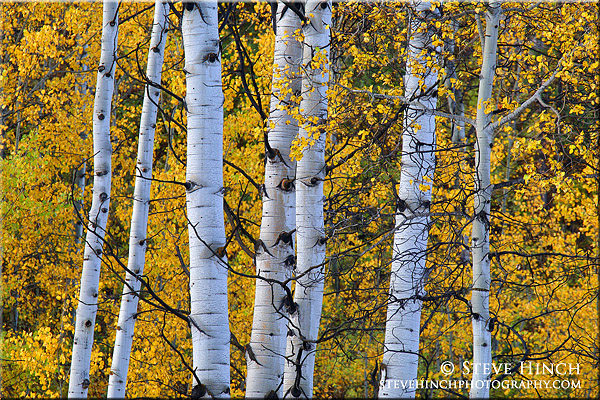
Aspens. Canon 5d4, 500mm, tripod, 1/2000 @ f11, ISO 800
It’s that time of year in the northern Rockies as aspens and cottonwoods are beginning to reach peak autumn color. It’s been incredibly smoky over the past week or so which means sweeping wide angle photos don’t work well. But more intimate close ups like this tend to work nicely. Rain and cool weather came through yesterday so hopefully that will clear out the smoke and push the trees into peak color. Right now there’s a good mix of green, gold, and brown. We had a hard freeze a few weeks ago, so some trees went straight to brown while others are still green. The peak color only lasts a short time, so hopefully the weather will cooperate.
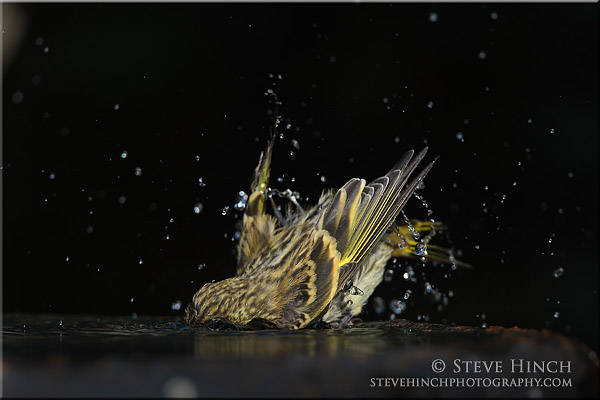
Pine Siskin. Canon 5d4, 500mm + 1.4TC, tripod, 1/3200 @ f5.6, ISO 1000
I missed my usual post on Sunday as I’ve been pretty busy with a special project that I’ll post about shortly and also with photographing a lot of birds, both those migrating and those that will stay the winter. This is a pine siskin taking a bath in the bird bath in my backyard, captured right as it plunged in. I spot metered off the bird so the backyard and most of the foreground fell to black while the bird and water droplets are correctly exposed.
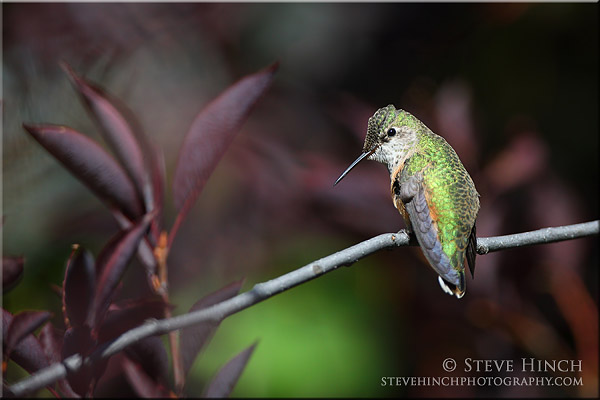
For the past month now, I’ve been focused a lot on photographing hummingbirds here in Montana. Where I live, we have three species, rufous, broad-tailed, and calliope. All three have come through my yard in the past month. Seen here is the calliope hummingbird which is the smallest bird in North America. It weighs less than 3 grams and is about 3 inches long. What it lacks in size, it certainly makes up for in beauty.
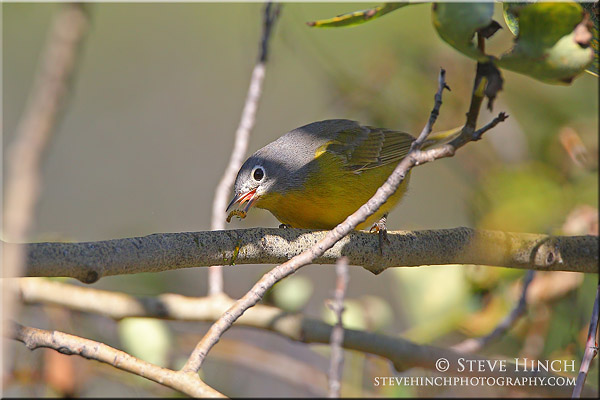
Fall migration has been underway for a while now here in Montana and I’ve seen several birds that I usually don’t see in our backyard, including this Nashville Warbler. This is only the second one I’ve ever seen and it found itself a meal in our aspen tree.

 steve hinch photography