Spring Brings Babies

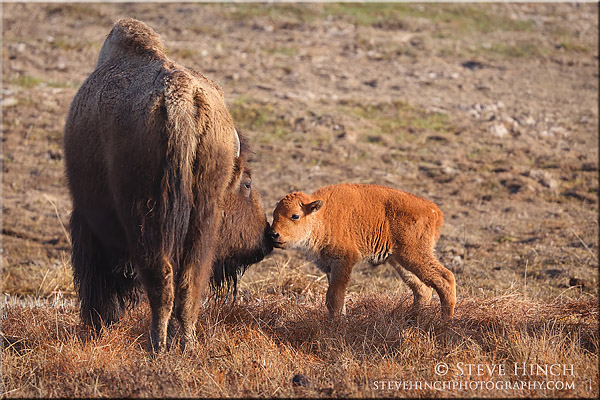
Bison and Calf. Canon R5, 400mm, beanbag, 1/1250 @ f5.6, ISO 800

Spring means babies and bison calves are among the first of the newborns to show up. They can be born as early as April but become more commonly seen in May. While I’ve been seeing calves randomly here and there while in Yellowstone, it wasn’t until a few days ago that I was able to have a wonderful photo shoot with several baby bison. The light was really nice and I always look for interaction between either calves or calves and adults. This moment was one of the moments I like to have the opportunity to photograph as the mother nuzzled her calf.
Spring in Yellowstone

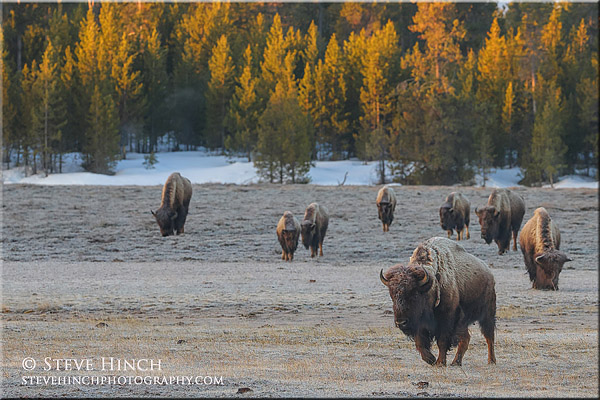
Bison. Canon R5, 300mm, handheld, 1/500 @ f8, ISO 1600

When winter ends and spring begins is often a fine line. Snow can fall at any time across the high plateau that is Yellowstone National Park, even in July and August. It’s actually expected in spring. But after a hard winter like this past one, it can’t green up soon enough for the park’s ungulates who survive mostly on fat reserves. This image was taken this past Saturday and there was very little green showing up in the meadows that weren’t still covered in snow, across 6,500 to 7,000 feet elevation. But I went into the park Monday morning and was glad to see hints of green popping up in the meadows. We’ve had a warm week and some parts of Montana had record high temperatures over the weekend though it is supposed to cool back down again in a few days. The only thing predictable about spring in Yellowstone is that it will be unpredictable!

Snow? What Snow?

Snow-covered Red Fox. Canon R5, 400mm (and cropped), handheld, 1/500 @ f5.6, ISO 1600

We’re finally having a nice stretch of weather but April has had a good amount of snowfall too. One the one hand, we certainly need the snowpack to hold up in the mountains well into summer as it’s a crucial source of moisture for the region into the warmer months. But on the hand, the lower elevations certainly could use some greening up. Much of Yellowstone that I’ve seen so far still has a foot or more of snowpack and where the snow has melted, green grass has yet to start coming in. There are some extremely skinny bison in the park and they desperately need green grass at this point. I think this fox’s apparent expression kind of sums up this past winter.

Roseate Spoonbill

Roseate Spoonbill. Canon R5, 400mm, handheld, 1/800 @ f8, ISO 1600

Yellowstone’s been open for a few days now and as I write this (Monday afternoon), it’s snowing quite heavily outside. I don’t have any photos yet from Yellowstone but I had planned on posting a final, for now, image from Florida and wanted to share one of my favorite wading birds. Roseate Spoonbills are quite beautiful in their pink plumage. Their heads are bald and their pink color along with their flat, spoon-shaped bill makes them quite unique. I consider myself lucky to see them when I do and even luckier to have a chance to photograph one.

Yellowstone Opens for the Summer Season

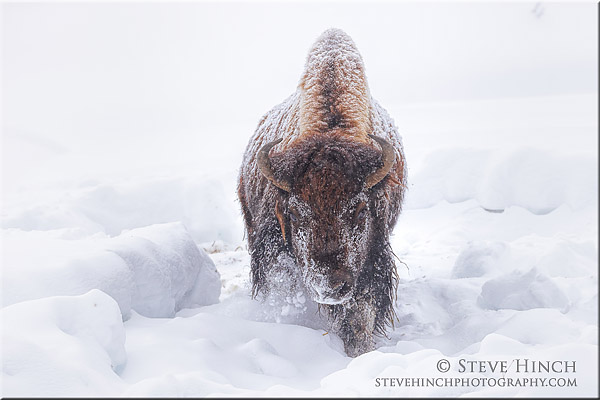
Bison in Snow. Canon R5, 400mm, handheld, 1/800 @ f8, ISO 1600

Yellowstone National Park has two “seasons” for tourists, summer and winter. Basically the seasons break down to can you drive into the park or not through most entrances. The summer season entails spring, summer, and part of fall before the snows start to pile up in the park. Well, the “summer” season opened on Friday. While it might be the summer season, everything still looks much like it does in this bison photo from early March. Snow is still falling through there has been a lot of melting in the lower elevations. I posted a similar photo to this one back in March, which was my preferred “pose” by this animal but my wife preferred this one.

Prehistoric

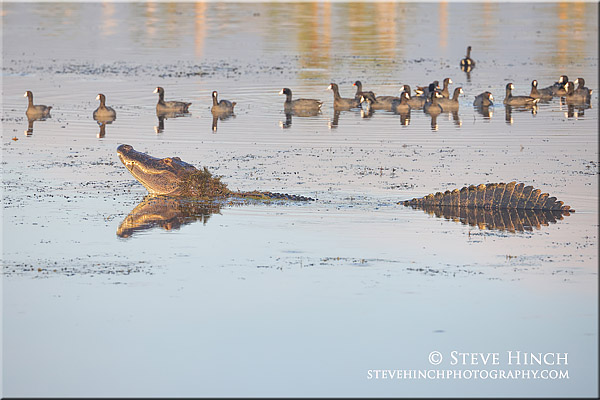
Bellowing Alligator. Canon R5, 400mm, handheld, 1/2000 @ f8, ISO 1600

Our trip to Florida was a little premature for the alligator breeding season to start, but a streak of 90 degree plus days must have kicked things off. My second morning out photographing lead to an eruption of bellowing gators across the swamp. If you’re never heard a bellowing gator before, then you’re missing out on one of the most amazing, prehistoric sounds in nature. Breeding season is kicked off by the alligators bellowing and arching their heads and tails out of the water as seen here. On this morning, the entire swamp was full of bellowing gators and it was quite an experience.

Tundra to the Moon

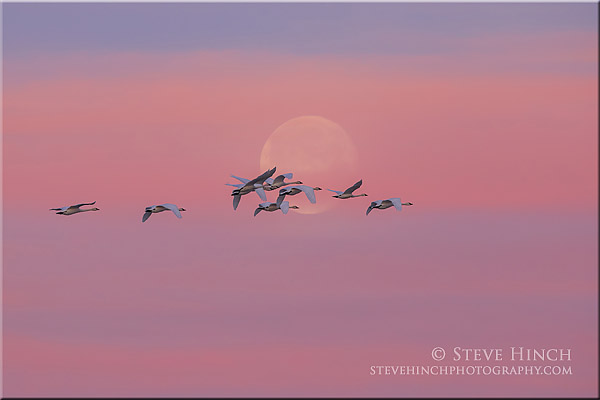
Tundra Swans flying past the Moon. Canon R5, 500mm, tripod, 1/500 @ f8, ISO 1600

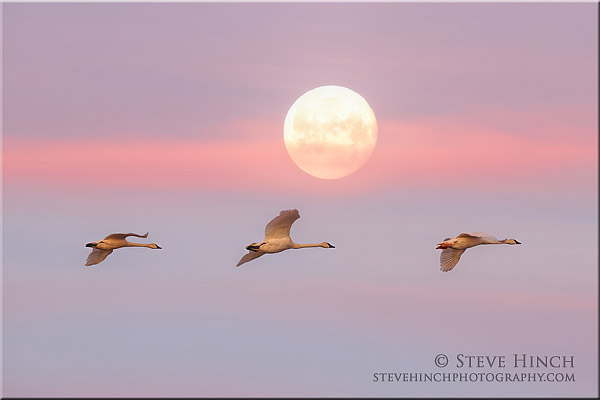
This is another image from my sunset and sunrise photo shoot at the Freezout Lake Wildlife Management Area in northern Montana. Unfortunately the snow geese had largely left the evening before, so there were very few birds around in the morning. Fortunately small groups of tundra swans were still moving around. I missed the first group that flew by the full moon as I wasn’t quite ready and I kicked myself for missing it. But I was ready for the second group as seen here. I also photographed a third group group of three a bit later and have that image below. It was a beautiful morning except for the raging wind which did make it hard to keep a steady lens. But fortunately this images came out nicely.

Tundra Swans flying past the Moon. Canon R5, 500mm, tripod, 1/400 @ f8, ISO 3200

For the Birds

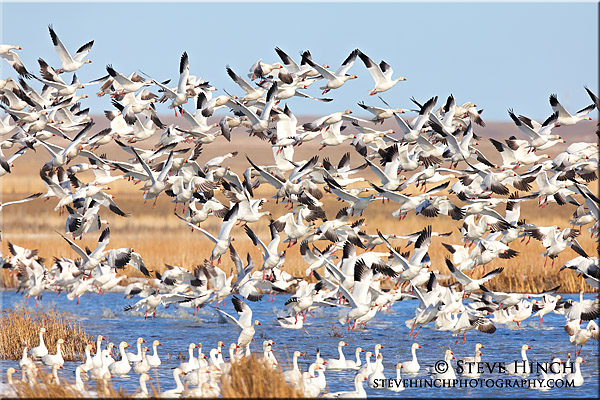
Snow Geese. Canon R5, 500mm + 1.4TC, tripod, 1/4000 @ f8, ISO 800

My next few posts will be “for the birds” since I’m alternating between some images from Florida at the end of March and a recent trip to witness the snow goose migration. Montana is home to one of the great bird migrations each spring as thousands of snow geese come through on their way to the artic. The day before I arrived, approximately 88,000 snow geese were present. The day I was there I witnessed as about 40,000 snow geese took flight in the evening to continue their journey north. By sunset the lake was quiet and the next morning only about 6,500 snow geese were left. The action was hard to photograph because trying to get an image that wasn’t complete chaos was difficult. In this scene, I was able to use the lake and geese on the bottom to anchor the action as hundreds of geese came in to land.

Snow Geese. Canon R5, 500mm + 1.4TC, tripod, 1/4000 @ f8, ISO 800

Sandhill Colt

Sandhill Crane and Colt. Canon R5, 400mm, handheld, 1/1600 @ f8, ISO 1600

Here in Montana, the sandhill cranes have only started returning for spring, let alone started nesting. But in Florida they’re already hatching young. This young sandhill crane, or colt as the young are called, was hatched on March 3, from what I was told, which would have made it 23 days old at the time of this photo. The sandhill family received a lot of attention and the park had put up signs stating for people to stay at least 25 feet away. Most people followed the rule which helps to minimize the stress and impact on these amazing birds.

Sandhill Crane Colt. Canon R5, 400mm and cropped, handheld, 1/1600 @ f8, ISO 1600

Spring Break

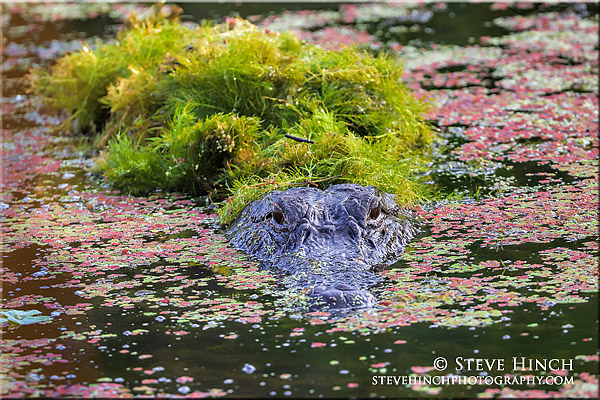
American Alligator. Canon R5, 400mm, handheld, 1/640 @ f8, ISO 1600

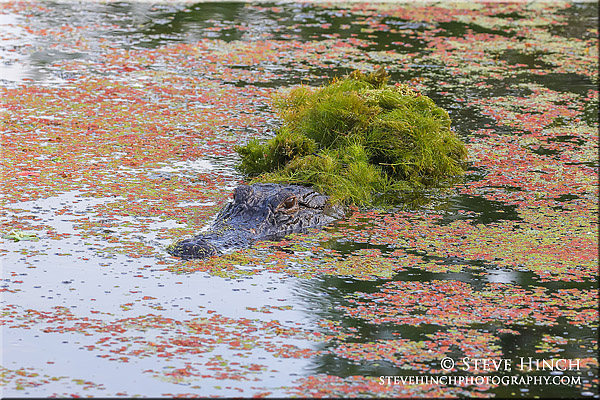
Now that I have a child in school, spring break is a thing. So what better thing to do for spring break than go to Florida! This trip was more about doing stuff for the kids than photography but I did manage to squeeze in two mornings to photograph. Usually I try to do one place I know well where I can get some good bird/wildlife images and then try out another place that I haven’t been to before. Since I ran out of time, I opted to try the new place first. It ended up being so amazing I did both mornings that I had allotted for photography. I came across this alligator while walking along a boardwalk through a marsh. The gator was covered in vegetation and looked freaking awesome. The boardwalk already had me at an elevated position compared to the gator, so I sat down to get a lower perspective and photographed through the rails in order to get a more eye level angle. This ended up being one of my favorite images. The gator eventually swam under the boardwalk and as he swam along, most of the vegetation eventually slid off his back, so I’m glad to have seen this when I did. Below is a view of the alligator from a standing position.

American Alligator. Canon R5, 300mm, handheld, 1/640 @ f8, ISO 1600