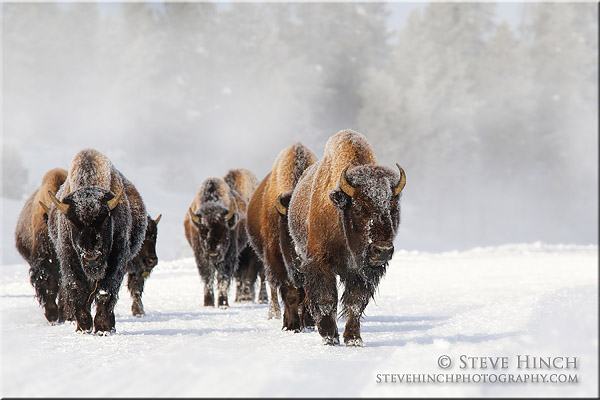
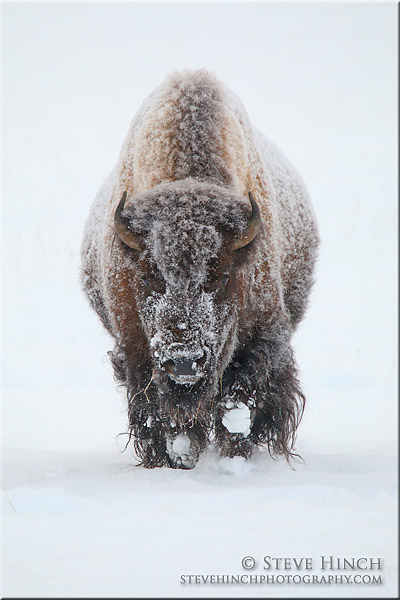
These bison were making their way down the groomed road on a cold morning. I’m not sure what the temperature was on this morning, but it was cold enough for the steam from the nearby hot springs to coat the bison. As the sun rose, the frost quickly melted off but not before some neat moments such as this one. When it comes to winter in Yellowstone, for wildlife I think nothing is more iconic than frost or snow covered bison.
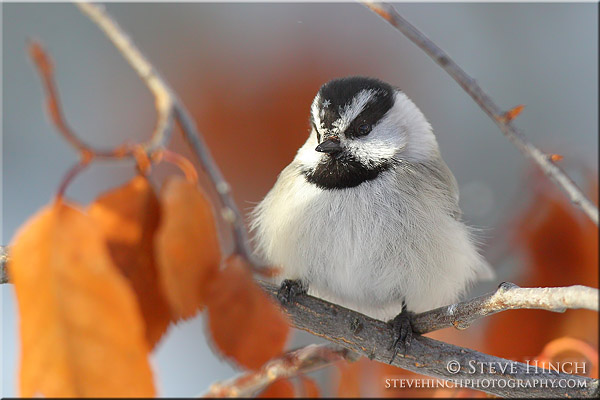
Mountain chickadee. 500mm, tripod, 1/1000 @ f5.6, ISO 800
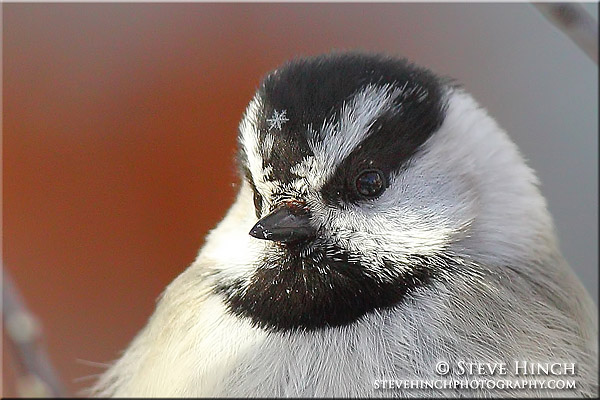
I hadn’t planned on making a post today, but when I was reviewing photos yesterday, I had to share this one. While mountain chickadees are certainly a great photo subject and one of my favorite backyard birds, it wasn’t until I saw this image full size on my computer that I realized it was special. If you look closely on the forehead of the photo, you can see a perfectly formed snowflake. The first photo is cropped from the original but I did a second crop for viewing purposes to show the snowflake better.
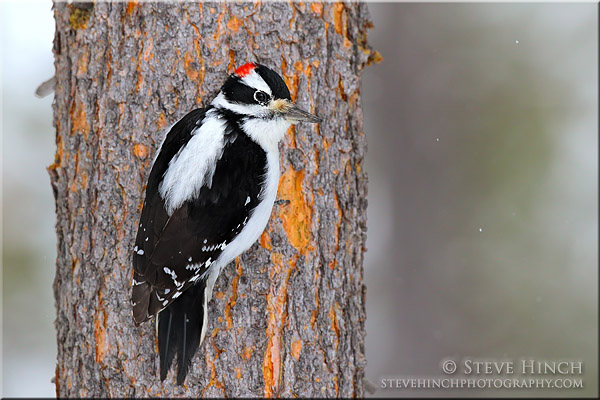
Hairy woodpecker. 500mm, tripod, 1/640 @ f5.6, ISO 1000
Since I’ve posted several bison images in a row, I’ll mix it up and come back to a bird. This hairy woodpecker has been coming frequently to my backyard but he is skittish when it comes to trying to get a decent photo. Despite that, I’ve been able to photograph him enough now to finally get a few images I like, including this one. Hairy and downy woodpeckers can be tricky to differentiate and it doesn’t help that their ranges are very similar. The hairy woodpecker, while not large, is bigger than a down and has a longer bill. The downy woodpecker also has black spots on the white outer tail feathers whereas the hairy woodpecker doesn’t. Regardless of species, woodpeckers are certainly fun to see!
There are special conditions that make photographing winter in Yellowstone wonderful. Cold, sunny mornings are at the top of that list as it usually means everything is frosty, including the bison. Bison being covered in a coat of frost is actually a good thing. It indicates their winter coats are doing the job they’re supposed to do and keeping all their body heat within the coat, where the bison needs it. No body heat is escaping the coat to melt the frost and the bison stays warm and hopefully healthy. This cow and younger bison were part of a very frosty herd on a morning with temperatures near zero degrees Fahrenheit. The mist and snow covered trees only accented the scene even better
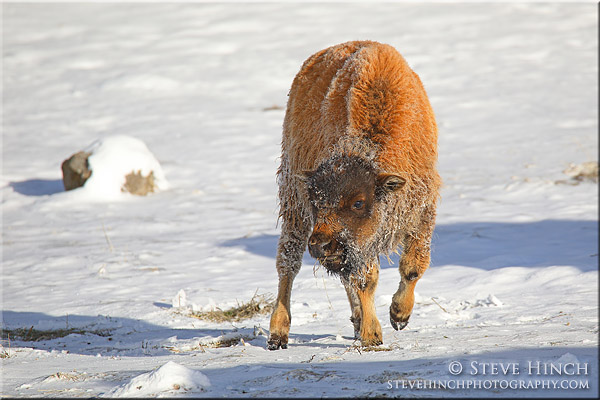
I haven’t posted as much as I might lately as I had a sinus infection and now a cold is trying to drag me down. That’s on top of the usual business around the holiday season, so posting has taken a back seat. But a few days ago, I came across this young bison calf in Yellowstone. It’s unusual to see a calf this young at this time of year. Judging by the darker hair on his head, I’d guess his, or her, age to be around four months, give or take. I think the first reaction is “oh no, he won’t survive the winter,” and he may not. But if he was born during the rut, then his mother shouldn’t be pregnant and may well still be producing milk, which gives him a huge advantage over the other bison who aren’t getting any nutrition this time of year. Plus, as you can see, his coat is very thick and the frosty coating indicates it’s doing it’s job and keeping his body heat inside where it belongs. Hoping the best for this little guy though winter has already taken it’s toll on at least one adult bison so far, and I’m sure more than that. Winter is tough in Yellowstone but bison are hardy survivors.
Wishing everyone a very happy and prosperous New Years 2020! If you’re like me, you enjoyed a nice, quiet New Years Eve at home, which is my favorite way to bring in the new year. This cow bison was photographed a few days ago in Yellowstone on a cold, crisp morning.
Big Sky, Montana. 552mm, tripod, 1/200 @ f8, ISO 800
Winter is well under way in Montana. Yellowstone has been open to over-snow traffic for a week now and many ski resorts have been open since Thanksgiving. The image above was taken in November as I drove to Bozeman and shows Lone Mountain at Big Sky. When viewed large enough, ski lifts and such can be seen on the mountain and even at this size, two buildings can be spotted if looking close enough. I’m personally not a down-hill skier but my wife will be on the lower slopes here soon enough. Wishing everyone a very merry Christmas and happy holidays!
Snow geese and sandhill cranes. 500mm, tripod, 1/1250 @ f8, ISO 400
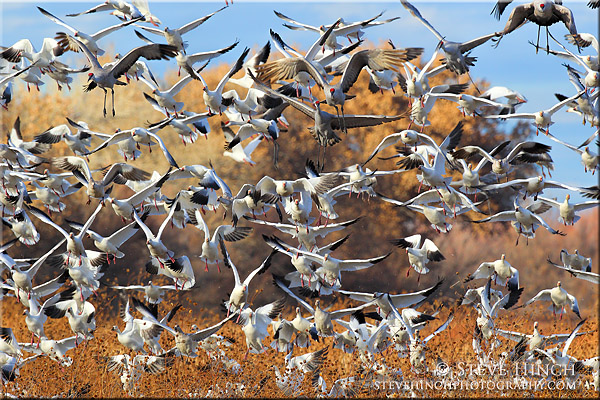
Of all the images I shot while at Bosque Del Apache National Wildlife Refuge, none of them captured the experience I expected more than this one. There’s at least two bird species here, sandhill cranes and snow geese, if not one or more others. Ross’s geese look a lot like snow geese and can be difficult to tell apart at times. Plus there were around 500 to 1,000 red-winged blackbirds swarming around at the same time I captured this image. But the chaos of birds along with the unimaginable sound at this moment was pretty much the experience I hoped for when planning my trip. This was only a small portion of the scene, captured with a 500mm lens. In all, along with the mentioned red-winged blackbirds, there were hundreds of Ross’s geese, thousands of snow geese, and the sandhill cranes numbered in the hundreds up to maybe a thousand. It was quite an experience to say the least.
Sandhill cranes. 500mm, tripod, 1/1250 @ f5.6, ISO 1000
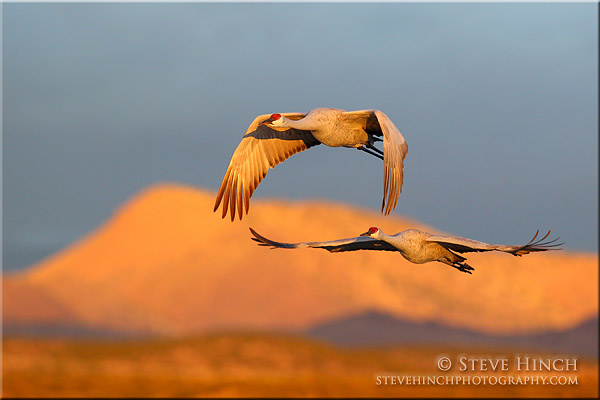
The only time Bosque del Apache National Wildlife Refuge feels crowded is at sunrise when photographers and bird lovers line up either to watch the snow geese or sandhill cranes take flight in the morning. But there’s a good reason for it as photos like this present themselves every few minutes as the cranes depart to their feeding grounds. They begin flying off well before sunrise so one hopes there’s cranes left once the sun comes up. But if there are, the resulting photos can be beautiful, especially with the mountains as a backdrop.
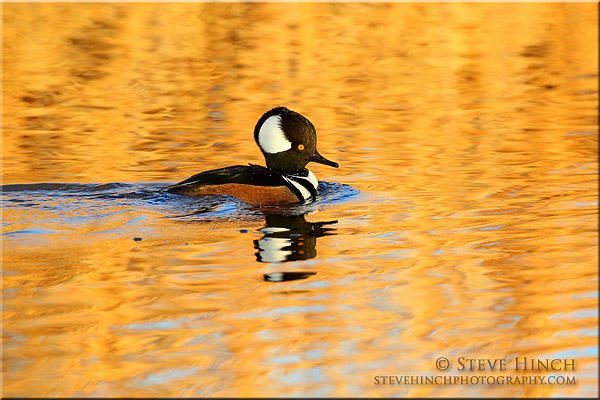
Hooded merganser. 500mm, beanbag, 1/1000 @ f5.6, ISO 800
Bosque del Apache National Wildlife Refuge is a popular birding and photography destination starting late November through December and for good reason. Sandhill cranes migrate here for the winter, numbering in the 1,000s and are the main attraction while snow and Ross’s geese come in the 1,000s as well and are a close second. While I certainly spent my time with those species and came away with some great shots, I also hoped to photograph some new species for me but didn’t really dream I’d get a hooded merganser. These tiny ducks have a tendency to quickly swim the other way when a car pulls up, if not fly off completely. So, at sunset on my last day, I was thrilled to finish my trip with this handsome merganser as he swam through a small cove where the light reflected stunningly in the water. I actually watched him and his mate for about an hour hoping he would come into this cove and my commitment paid off as this was among the last photos of the trip.



 steve hinch photography